
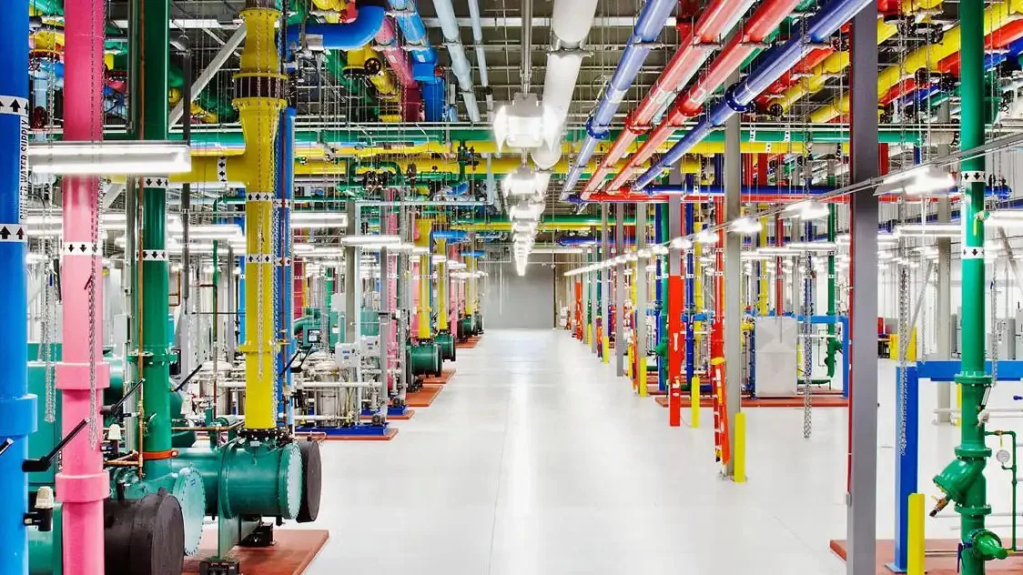
In the world of artificial intelligence, data is the new oil, and the infrastructure that powers it is becoming the new battlefield. In a surprising yet strategically brilliant move, Google LLC is reportedly planning to build a massive AI data centre on Christmas Island, an isolated Australian territory in the Indian Ocean.
This project, first reported by Reuters, isn’t just about expanding computing power. It’s about redefining where and how the next generation of AI infrastructure will operate, blending technology, geopolitics, and energy strategy in one bold play.
This isn’t just another Google cloud region. It’s a symbol of the next phase of AI dominance, where geography and geopolitics matter as much as algorithms and GPUs.
The Strategic Logic Behind the Location :
At first glance, Christmas Island seems like an odd choice. It’s remote, sparsely populated, and best known for its red crab migrations rather than tech innovation.
But in Google’s playbook, every location has strategic intent.
1. Geopolitical Positioning :
Christmas Island sits in a strategic location between Asia and Australia, making it an ideal midpoint for regional data distribution and digital sovereignty.
By hosting an AI data centre there, Google gains:
- Proximity to Asia’s fast-growing digital markets, including Indonesia, Singapore, and Malaysia.
- Security within Australian jurisdiction, aligning with Western defence and data governance frameworks.
- Reduced risk from major geopolitical flashpoints, such as the South China Sea tensions.
Essentially, it’s a digital fortress on the edge of Asia, ensuring AI workloads remain resilient, sovereign, and politically insulated.
2. Defence Cloud Integration :
Reports indicate that the facility will be built in partnership with Google’s defence cloud division, an increasingly important arm of the company that provides secure cloud and AI solutions for governments and military clients.
This hints that the data centre could handle:
- Defence-grade AI computation, including cybersecurity, satellite imaging, and predictive analytics.
- Dual-use workloads, supporting both public and government cloud environments.
- AI model training for security-sensitive applications, where physical isolation adds a layer of protection.
This kind of setup positions Google not just as a tech company but as a strategic AI, infrastructure partner in the Pacific theatre.
Energy, Environment, and Edge Computing :
Running large-scale AI systems requires massive energy inputs and cooling capacity, something that has become a global sustainability challenge.
Christmas Island offers some unique advantages on that front.
1. Renewable Potential
The island has strong potential for solar and wind generation, and new undersea cables can facilitate clean energy transmission from mainland Australia.
Google has long pledged to operate on carbon-free energy by 2030, and locating data centres in areas where renewable projects can be scaled locally is central to that mission.
Imagine this:
A green-powered AI data hub running on hybrid solar grids, cooled by oceanic airflows, with an energy footprint optimized for continuous learning algorithms.
2. Natural Cooling and Resource Efficiency
Being surrounded by ocean allows for efficient seawater cooling systems, reducing the environmental strain that traditional inland data centres face.
This geographic advantage can lower operational costs while enhancing sustainability credentials, both vital for long-term AI workloads.
3. Edge AI Capabilities
Beyond cloud services, the Christmas Island hub could serve as a major edge AI node, reducing latency for regional users while enabling real-time AI inference for defence, logistics, and maritime operations.
This would allow AI systems to make faster decisions closer to data sources, essential for defence networks, autonomous systems, and satellite communication chains.
The New Race: AI Infrastructure and Digital Sovereignty
The move to Christmas Island underscores a growing reality, AI infrastructure is now a geopolitical asset.
Just as oil pipelines defined power in the 20th century, data pipelines and AI compute clusters define power in the 21st.
1. The US-Australia Tech Alliance :
This project reinforces the deepening tech alliance between the US and Australia, especially under the AUKUS partnership (Australia–UK–US).
While AUKUS began as a defence pact focused on nuclear submarines, its “Pillar II” now extends to AI, cybersecurity, and quantum computing.
Google’s move can thus be seen as civilian infrastructure supporting allied digital readiness, a cloud-based counterpart to AUKUS’s military coordination.
2. Countering China’s Digital Belt and Road :
China has been expanding its digital infrastructure footprint across Asia and Africa through state-backed companies like Huawei and China Telecom.
Google’s Christmas Island project could serve as a Western counterbalance, establishing a trusted, transparent cloud network in the Indo-Pacific.
3. The Era of AI Nationalism :
Governments are increasingly wary of who owns, controls, and powers the AI that underpins their economies.
By setting up a secure AI hub in a trusted allied territory, Google strengthens the narrative of AI sovereignty, ensuring that sensitive data and models are developed within reliable jurisdictions.
Engineering the AI Future: What’s Inside the Data Centre
While official details remain scarce, sources suggest the facility will integrate next-generation AI supercomputing clusters with Google’s custom Tensor Processing Units (TPUs), the hardware backbone of its large language models and cloud AI services.
Here’s what such a facility might feature:
- AI Superclusters: Thousands of interconnected TPUs for model training, fine-tuning, and inference workloads.
- Hybrid Cloud Architecture: Seamless integration with Google Cloud’s public and government regions.
- Quantum-Ready Infrastructure: Potential readiness for quantum-assisted AI workloads by 2030.
- Enhanced Cybersecurity Framework: Using AI to detect intrusions, monitor supply chains, and ensure data integrity.

Strategic Benefits Beyond Technology :
This project isn’t just about AI compute. It’s about future-proofing digital society.
By building in a remote, secure, and energy-efficient location, Google ensures resilience against global uncertainties, from cyber warfare to natural disasters.
1. Resilience and Redundancy
The island location offers physical isolation, which makes it less susceptible to sabotage or network failure. It can operate as a redundant AI node in case of mainland outages, part of Google’s multi-region continuity plan.
2. Economic Boost and Regional Development
For Christmas Island, this move could spark economic revitalization.
Jobs in energy, construction, data management, and logistics will follow, transforming the island from a forgotten outpost into a digital innovation hub.
3. Model of Distributed AI Infrastructure
If successful, the project could inspire a new model of distributed AI data centres, smaller, regionally strategic, and ecologically balanced, rather than massive, power-hungry hubs concentrated in big cities.
The Broader Implications: The Future of AI Geography
The Christmas Island initiative symbolizes a paradigm shift in how we think about AI geography.
It shows that the next era of computing won’t be defined solely by who builds the smartest algorithms, but by who controls the physical and energy foundations of intelligence itself.
We’re witnessing:
- The militarization of AI infrastructure as cloud networks become tools of statecraft.
- The decarbonization of intelligence, as renewable-powered data centres set new industry benchmarks.
- The decentralization of compute, as companies spread their assets globally for resilience and sovereignty.
As AI models grow more complex, their demand for compute power doubles every few months.
That’s why every new facility, from Google’s Christmas Island hub to Microsoft’s Arctic data vaults, represents not just expansion, but strategic adaptation to a new computational order.
What This Means for the Future ?
- AI and Cloud Will Merge with Geopolitics.
The lines between tech infrastructure and national strategy are disappearing. Expect cloud providers to align more closely with allied governments and defence ecosystems. - Remote Regions Will Become AI Powerhouses.
Islands, deserts, and Arctic zones will see data centre investments due to energy efficiency, security, and cooling advantages. - Sustainability Will Define AI’s Legitimacy.
Carbon-intensive AI won’t scale ethically or politically. Renewable integration, like what Google plans for Christmas Island, will become a license to operate. - AI Sovereignty Will Drive Global Regulation.
Countries will increasingly demand local control over data and compute, creating regional AI blocs and strategic alliances.
Conclusion: A New Digital Frontier
Google’s decision to build an AI data centre on Christmas Island isn’t just an engineering feat, it’s a statement of intent.
It signals a future where AI, energy, and geopolitics converge, where the world’s smartest systems are trained not just in Silicon Valley, but in carefully chosen, globally strategic locations.
The move redefines what it means to “go to the cloud.”
Because in 2025 and beyond, the cloud has a map and that map is deeply political.
Final Thought:
The Christmas Island project is more than an infrastructure story. It’s the beginning of a new chapter in digital history, one where the world’s intelligence is distributed across oceans, powered by sun and code, and guarded by the tides of geopolitics.


 Cybervibe
Leave a comment