From Cool Apps to Core Systems :
The tech world is quietly experiencing a reset.
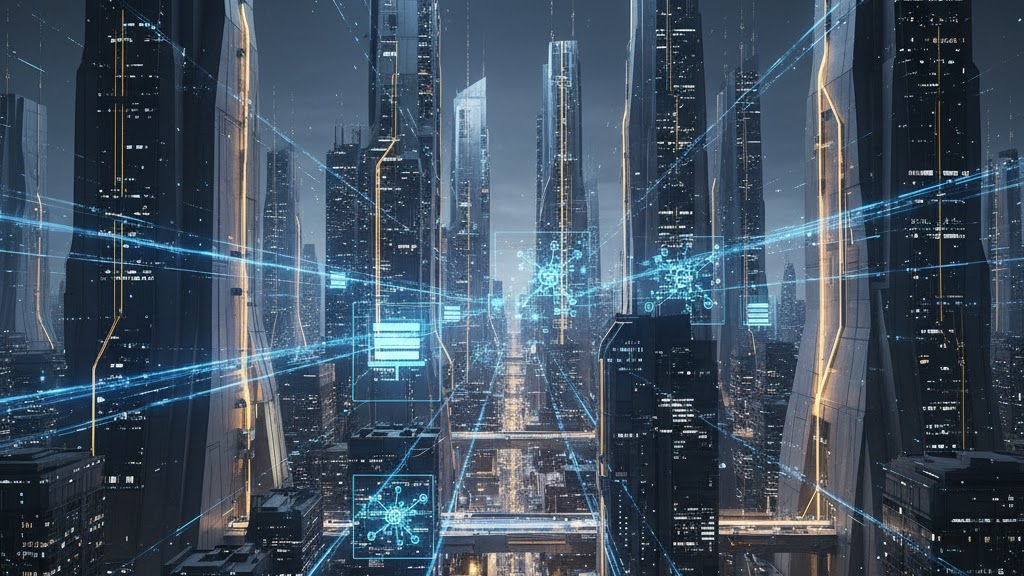
After years of hype around apps, content, and user growth, the focus has shifted to something less glamorous but far more powerful: AI infrastructure, the unseen machinery powering tomorrow’s intelligent systems.
The headlines say it all:
- NVIDIA leading chip innovation
- Amazon inking a $38 billion cloud deal with OpenAI
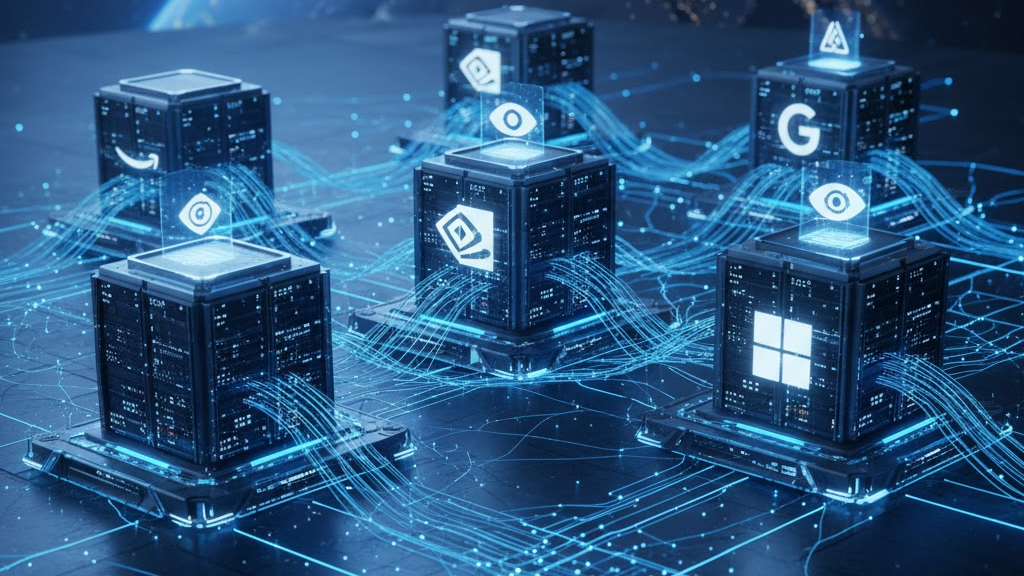
- Google, Meta, and Microsoft investing billions in custom AI data centers
Together, these moves signal one truth, the real battle in tech is no longer for eyeballs, but for compute.
Why the Realignment Happened
For the past decade, Silicon Valley was driven by growth-at-all-costs; apps, ads, engagement.
But the 2023–2024 downturn changed everything.
Rising interest rates, layoffs, and market fatigue forced companies to rethink their foundations.
And while consumer tech slowed, AI innovation exploded, demanding new forms of investment.
Suddenly, companies that built “software” realized they needed to build hardware too.
“AI broke the traditional tech hierarchy, it forced everyone to think like an infrastructure company,” says Morgan Stanley’s latest report.
Phase One: The Compute Race
AI models like GPT-5, Gemini, and Claude 3 demand astronomical compute power.
This has led to an unprecedented arms race for GPUs, chips, and energy.
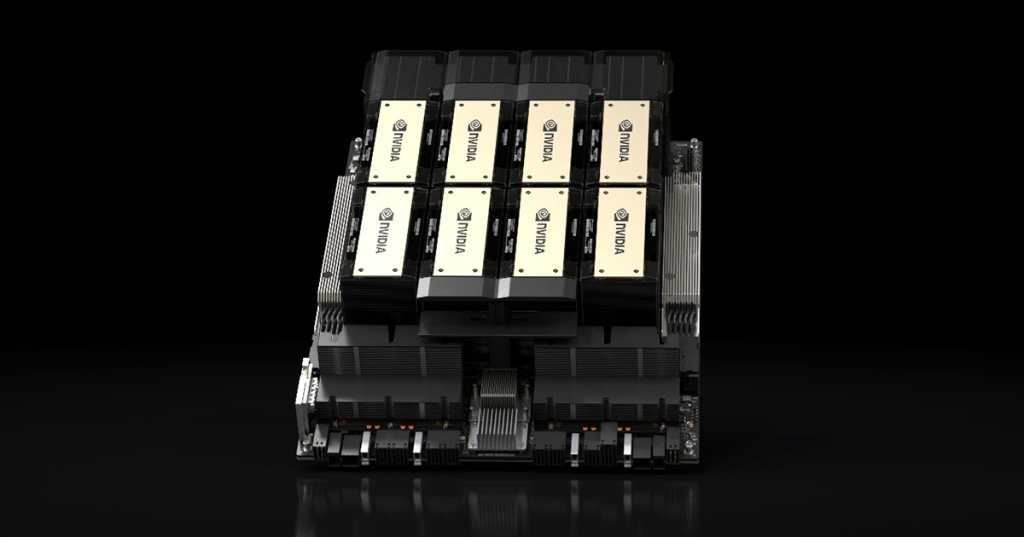
- NVIDIA’s Blackwell Ultra GPU delivers 3x performance with 40% less power, reshaping AI inference costs.
- AMD and Intel are fighting back with hybrid accelerators for edge-AI.
- Oracle and Tata are building massive AI superclusters in Asia.
The new bottleneck isn’t talent, it’s electricity and silicon.
And that’s where the trillion-dollar opportunity lies.
Monetizing Intelligence :
Once you’ve built the infrastructure, you need to make it pay for itself.
That’s why 2025 is being called the year of AI monetization.
Instead of offering free tools, companies are now weaving AI into profit-generating products:
- Microsoft charges $30/month per user for Copilot.
- Google integrates Gemini into Workspace with tiered pricing.
- Meta uses generative AI for ad optimization, driving record ad efficiency.
These changes are rewriting revenue models across the tech sector, from SaaS to social media.
The message is clear:
AI isn’t just a feature, it’s a financial engine.
Phase Three: The Power Problem
Goldman Sachs recently forecasted that AI data centers will drive a 160% surge in global electricity demand by 2030.
The infrastructure boom is now colliding with energy constraints.
That’s pushing the industry to innovate in clean energy, cooling, and chip efficiency.
Key Developments:
- Microsoft is experimenting with nuclear-powered data centers
- Google has launched geothermal AI cooling pilots
- Amazon is investing in AI-driven grid optimization
In other words, the energy sector is becoming part of the AI economy.
Every watt now counts as much as every byte.
Winners of the Realignment
1. The Infrastructure Titans
Companies like NVIDIA, AWS, and TSMC are sitting at the center of the storm, controlling supply chains and shaping how fast AI evolves.
2. The Integrators
Microsoft and Google are blending hardware, software, and data to build seamless AI ecosystems, creating both products and platforms.
3. The Local Innovators
Emerging markets, especially India, the UAE, and Singapore, are becoming AI infrastructure hubs, thanks to cheaper energy and supportive regulation.
The Human Element
It’s easy to forget amid the data and dollars, this realignment is also changing the nature of work.
Automation is evolving from a back-office function to a strategic co-worker.
Enterprises are deploying AI not just to replace humans, but to augment creativity and decision-making.
The companies thriving in this transition aren’t the ones cutting jobs, they’re the ones retraining talent.
Challenges Ahead
Even as AI infrastructure booms, challenges loom large:
- Chip scarcity continues to slow rollout for smaller players
- Data sovereignty laws fragment global scaling
- Monetization fatigue risks backlash among users
Still, the trend is irreversible.
Tech is maturing from building experiences to building the systems that make those experiences possible.
The Future: Intelligence as Infrastructure
The world’s next great technology leap won’t come from a new app, it’ll come from how efficiently intelligence itself can run.
In this new paradigm:
- Compute = Creativity
- Energy = Productivity
- AI Infrastructure = Innovation
It’s not the “App Economy” anymore, it’s the AI Infrastructure Age.
“From data to dollars, tech’s realignment is complete.”
The Conclusion :
The global tech sector isn’t collapsing, it’s compacting.
It’s trading speed for strength, scale for sustainability, and hype for hardware.
What we’re witnessing is the industrialization of intelligence a world where data flows like electricity and computation becomes currency.
As AI continues to evolve, the companies that win won’t just innovate at the surface.
They’ll own the core, the invisible engines driving the intelligence economy.


 Cybervibe
Leave a comment