

Introduction: A New Chapter in the AI Revolution
Artificial Intelligence has evolved from a research fascination to a global race for power, innovation, and infrastructure dominance. At the heart of this race stands OpenAI, the company behind ChatGPT and GPT-5, which has now hinted at a monumental shift in its strategy, becoming a cloud computing provider.
In a recent update, OpenAI CEO Sam Altman clarified that while the company hasn’t sought government guarantees for data centres, it is actively exploring ways to sell compute capacity directly to businesses and individuals. This means OpenAI could soon compete head-to-head with the world’s largest cloud providers, Amazon Web Services (AWS), Microsoft Azure, and Google Cloud.
This announcement is more than a business expansion; it’s a declaration that the next AI frontier won’t just be won with smarter models, but with greater control over compute power.
The Evolution of OpenAI: From Model Maker to Infrastructure Titan
When OpenAI was founded in 2015, its mission was simple yet ambitious to ensure artificial intelligence benefits all of humanity. Over the years, it evolved from a nonprofit research organization into a powerhouse driving the generative AI revolution.
Products like ChatGPT, DALL·E, and Whisper have transformed industries and redefined how humans interact with technology. But every leap in AI capability came with an equally massive need for compute power, the GPU and TPU clusters that make these models possible.
As Altman himself has noted several times, AI innovation is bottlenecked by compute, not creativity. Training models like GPT-5 requires tens of thousands of high-end GPUs, immense energy, and sophisticated cooling and networking systems.
This dependency on existing cloud providers, particularly Microsoft’s Azure, which hosts much of OpenAI’s infrastructure, may now be seen as a strategic limitation.
By launching its own AI cloud service, OpenAI could break free from overreliance on partners and control the entire AI stack, from model design to data processing to cloud deployment.
What Exactly Is an “AI Cloud”?
Before diving deeper, let’s clarify what this means.
A traditional cloud provider like AWS or Google Cloud rents out computing power, storage, and networking capabilities to businesses. Developers can host apps, store data, or train AI models on these platforms.
An AI Cloud, however, is optimized specifically for machine learning workloads. It focuses on:
- High-performance GPUs and accelerators for AI training and inference.
- Pre-trained model hosting, allowing users to build on top of existing AI architectures.
- Data pipelines, AI APIs, and toolkits for model fine-tuning and deployment.
- Developer platforms that make advanced AI accessible even to small teams or startups.
If OpenAI enters this market, it would offer direct access to the same infrastructure that powers ChatGPT, something that no other provider can currently replicate.
This would make OpenAI not just a model developer, but a foundational layer of the global AI ecosystem.
Why This Move Matters:

For decades, the cloud business has been dominated by the “Big Three”:
- Amazon Web Services (AWS) – the leader in scale and variety of services.
- Microsoft Azure – deeply integrated with enterprise software and AI through its OpenAI partnership.
- Google Cloud – focused on AI, data analytics, and machine learning infrastructure.
Together, they control more than 65% of the global cloud market.
Now, imagine OpenAI entering this field with an AI-first cloud, infrastructure designed specifically for generative models, neural networks, and data-driven intelligence.
This isn’t just about another cloud provider; it’s about a new paradigm of compute specialization.
In this era, compute is the new oil, the scarce and valuable resource powering every AI system. Whoever controls the compute, controls the pace and reach of AI innovation.
By creating its own AI Cloud, OpenAI can:
- Reduce dependence on third-party providers.
- Lower operational costs over time.
- Offer scalable compute directly to clients.
- Gain more control over data privacy, latency, and performance.
In short, OpenAI could become both the engine and the fuel provider of the AI economy.
What OpenAI’s AI Cloud Might Offer
While OpenAI hasn’t released details yet, experts predict several possible offerings:
1. Dedicated AI Compute Access
Developers could rent GPU clusters designed for high-performance AI workloads, similar to AWS EC2 but optimized for deep learning frameworks like PyTorch or JAX.
2. Integrated API Ecosystem
Businesses could host and deploy models while seamlessly connecting to OpenAI’s API suite, including ChatGPT, DALL·E, and Whisper all from a unified dashboard.
3. Fine-Tuning and Custom Training Tools
Companies could train domain-specific models using their private data while leveraging OpenAI’s compute backbone.
4. Pay-As-You-Go Pricing Models
To compete with AWS and Azure, OpenAI’s pricing may follow a usage-based model, giving startups access to world-class compute without upfront investment.
5. Developer SDKs and Automation Features
Expect a library of developer tools and SDKs to simplify model integration, deployment, and monitoring, possibly integrated with popular coding assistants like GitHub Copilot.
The Ripple Effect: How It Changes the AI Ecosystem
This move could have seismic effects across multiple industries.
1. Cloud Market Shake-Up
AWS and Google Cloud could face new competition from a company that not only sells compute but also creates the world’s leading AI models. That gives OpenAI a unique advantage, it knows exactly what AI developers need.
2. Empowering Startups and Researchers
Currently, training large AI models can cost millions in compute resources. If OpenAI provides access to its infrastructure at competitive rates, it could democratize AI development, enabling smaller players to innovate faster.
3. Microsoft’s Role
Microsoft is OpenAI’s largest investor and infrastructure partner via Azure. This new direction raises strategic questions, will OpenAI’s cloud compete with or complement Azure’s AI offerings? It’s possible OpenAI’s cloud could operate as a specialized layer within Azure’s ecosystem.
4. Geopolitical Implications
The AI infrastructure race has global stakes. Countries are investing billions to secure their own compute supply chains. If OpenAI expands globally with AI data centres, it could influence digital sovereignty debates, especially regarding data storage, ethics, and governance.
Strategic Timing: Why Now?
There’s a reason this announcement comes in late 2025.
1. Exploding AI Demand
Global AI adoption has skyrocketed since the introduction of GPT-4 and GPT-5. Every company from fintech to healthcare wants to deploy AI models. Yet, access to GPU compute is scarce and expensive.
By stepping in, OpenAI can monetize this demand and capture market share before others scale up.
2. Hardware Partnerships
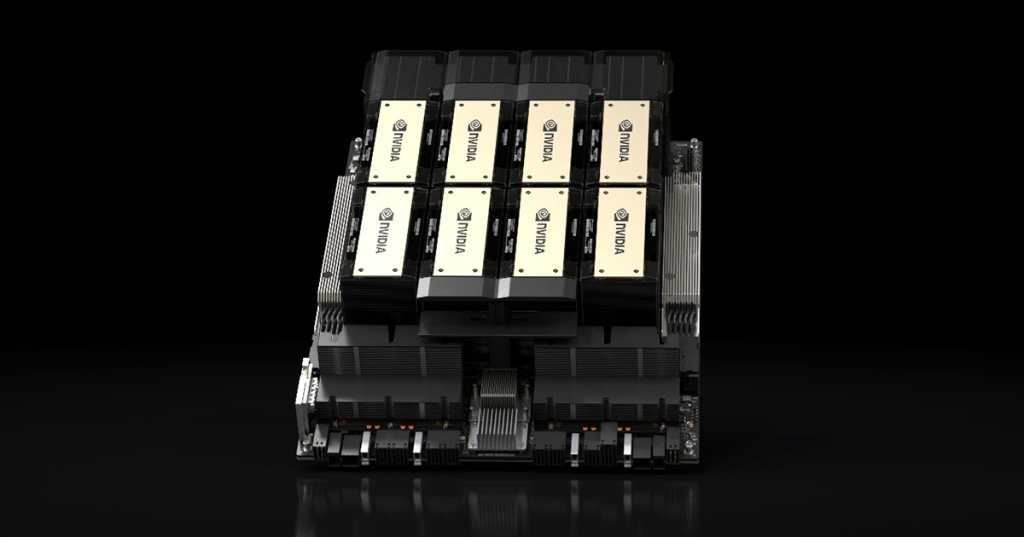
OpenAI has close ties with NVIDIA, whose GPUs are the lifeblood of modern AI. It’s also rumored to be exploring custom AI chips, possibly similar to Google’s TPUs or Amazon’s Inferentia processors.
Owning or co-developing custom hardware would drastically cut costs and improve performance.
3. Decentralized Compute Ecosystems
There’s also growing interest in distributed or decentralized compute systems, where smaller data nodes share processing power. OpenAI’s AI Cloud might incorporate such architectures for scalability and resilience.
The Economic Angle: A Multi-Trillion-Dollar Opportunity
The cloud computing industry is valued at over $650 billion (2025), with AI workloads contributing the fastest growth segment. By 2030, AI infrastructure spending could exceed $2 trillion globally.
Even a modest 5% market share for OpenAI could represent tens of billions in annual revenue.
Moreover, by offering AI Cloud services, OpenAI can transform from a software provider to a platform economy leader, earning recurring income through compute leasing, APIs, and AI model hosting.
Sustainability and Ethics: The Hidden Challenge
However, running massive AI data centres raises concerns about energy use and environmental sustainability.
OpenAI has previously emphasized the importance of responsible AI development, and entering the cloud space will demand transparency on how it sources power and manages emissions.
Expect OpenAI to invest in green energy partnerships, liquid cooling systems, and carbon-offset data centres to align with global sustainability goals.
The Future: Power, Platforms, and the Compute Race
The implications of OpenAI’s potential AI Cloud go far beyond business strategy, they reshape the philosophy of AI access.
If successful, OpenAI would unify the entire AI stack:
- Infrastructure (Compute & Cloud)
- Foundation Models (GPT, DALL·E, Whisper)
- Applications (ChatGPT, Enterprise APIs)
This kind of vertical integration has never been done at such scale in AI history. It could mark the dawn of Compute as a Catalyst, where innovation depends not on ideas alone, but on who owns the machines that make those ideas real.
In essence, the AI battle is shifting from algorithms to architecture from “Who builds the smartest AI?” to “Who powers the world’s AI?”.
And with Sam Altman’s latest vision, OpenAI is stepping into that arena not as a player, but as a platform.


 Cybervibe
Leave a comment