
When Cloud Meets Intelligence
The world’s most valuable resource is no longer oil or data, it’s compute.
And today, compute just got a major upgrade.
In a landmark announcement, OpenAI and Amazon Web Services (AWS) revealed a multi-year strategic partnership worth $38 billion, one of the largest deals in tech history.
The goal: expand OpenAI’s access to AWS’s next-generation high-performance cloud infrastructure, powering the next decade of AI research, product development, and global deployment.
This isn’t just another cloud contract, it’s a pivotal realignment of the AI ecosystem.
A Deal Decades in the Making
For years, the tech industry’s infrastructure wars have been fought quietly between a few giants: Microsoft Azure, Google Cloud, and AWS.
OpenAI’s partnership with Microsoft made Azure its exclusive cloud provider until now.
The $38 billion AWS alliance signals that the future of AI won’t be built on exclusivity.
It will be built on collaboration, scalability, and redundancy, the three pillars of industrial-scale intelligence.
AWS’s global cloud network gives OpenAI:
- Access to new data-center regions in North America, Europe & Asia.
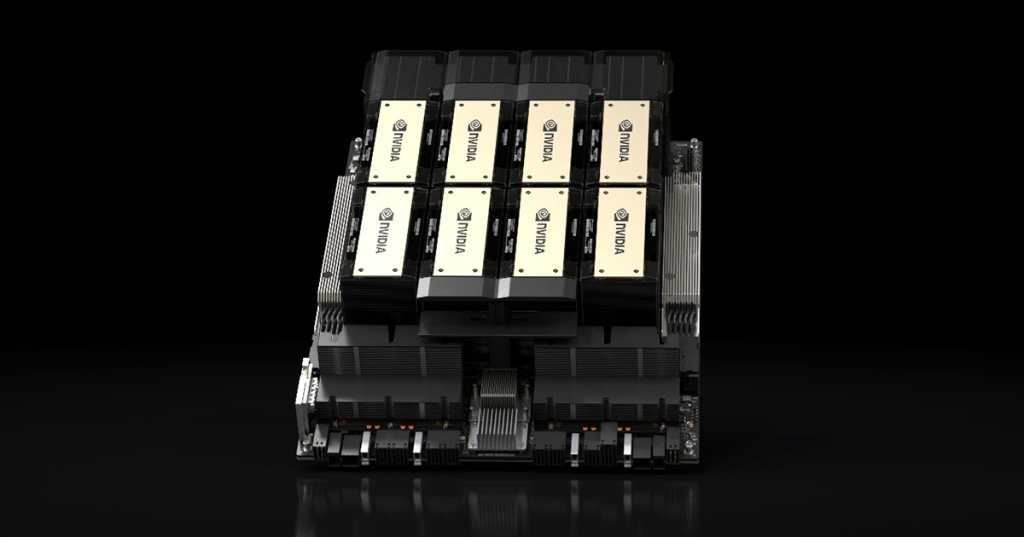
- Energy-efficient GPU clusters for training frontier models like GPT-6 and GPT-7.
- Custom AI chips (Trainium & Inferentia) designed to cut cost and carbon impact.
Together, these investments give OpenAI unprecedented computational independence and resilience.
The Economics of Intelligence
Let’s put $38 billion in perspective:
- It’s more than the GDP of a small nation.
- It’s nearly four times OpenAI’s last valuation ($8 billion in 2019 → $90 billion in 2025).
- It’s roughly what the world spends on AI servers every year.
So why such a massive commitment?
Because the future of AI is no longer about who has the best model, it’s about who can run it.
Every ChatGPT query, every DALL-E image, every Whisper translation consumes compute.
And that compute comes from somewhere specifically, the cloud.
AWS isn’t just selling storage or servers; it’s selling the fuel of AI progress.
Strategic Implications: Two Winners, One Ecosystem
This deal benefits both companies in monumental ways.
OpenAI Gets Scale
The partnership ensures OpenAI has enough capacity to train frontier models without bottlenecks.
It can run training jobs on tens of thousands of GPUs simultaneously while keeping costs predictable.
AWS’s new Trn2 and Inf2 chipsets also allow OpenAI to customize training for specific model architectures.
Amazon Gets Relevance
While Microsoft has dominated AI headlines, AWS has been quietly losing mindshare.
This deal puts Amazon back in the spotlight not for apps or assistants, but for owning the AI backbone.
As one analyst noted:
“Microsoft owns the conversation, but Amazon owns the computation.”
The Infrastructure Arms Race
This partnership is not happening in isolation.
Across the industry, AI infrastructure has become the new battlefield.
- Google is building its own AI super-data-centers in Singapore and Australia.
- Microsoft and NVIDIA announced co-investment in AI-optimized data grids.
- Oracle is partnering with Tata in India to build Asia’s largest AI compute cluster.
Why the rush?
Because the next generation of AI models (GPT-6, Gemini 2, Claude 3) require compute that makes today’s standards look primitive.
OpenAI’s previous training for GPT-4 used around 25,000 GPUs.
GPT-6 is expected to use more than 100,000 GPUs and consume ten times more energy.
This means the AI industry is becoming a hybrid of tech and energy.
The Power Equation: Compute + Energy = Intelligence
Goldman Sachs recently forecasted a 160% surge in global electricity demand by 2030, with AI data centers as the main driver.
AWS and OpenAI plan to address this through clean energy investments:
- Expanding solar and wind energy projects in Virginia and Texas.
- Using AI-driven grid optimization to minimize power waste.
- Developing custom cooling solutions using liquid and geothermal tech.
It’s a rare moment where AI innovation could actually accelerate sustainability.
Why Now? Timing the Deal
The timing of this partnership is no coincidence.
- AI demand is skyrocketing. ChatGPT has crossed 300 million weekly users.
- Competition is tightening. Anthropic and Google are training next-gen models.
- Regulatory scrutiny is growing. OpenAI needs more control and data security.
AWS offers not just compute, but compliance and trust, two things OpenAI needs as it moves into enterprise AI.
With global governments debating AI regulation, OpenAI is future-proofing its operations by spreading infrastructure across multiple jurisdictions.
The Ripple Effect: Industry-Wide Shifts
1. AI Compute Becomes a Service
Expect OpenAI to offer “Compute as a Service,” selling excess GPU power to developers and enterprises.
This mirrors Amazon’s own AWS playbook from 2006 turning internal infrastructure into a global business.
2. Chip Manufacturers Get a Boost
NVIDIA and AMD stand to gain billions in chip orders as AWS and OpenAI expand compute capacity.
Meanwhile, Amazon’s Trainium and Inferentia could reduce long-term dependence on third-party silicon.
3. Smaller Players Get Pushed to the Edge
Smaller AI startups will increasingly run on AWS and OpenAI platforms rather than building their own data centers.
That means faster access to AI tools but also deeper dependence on Big Tech.
Market Reaction
Following the announcement, Amazon’s stock climbed 4.5% and OpenAI’s valuation reportedly touched $100 billion.
Investors see this as a sign that AI infrastructure is the new gold standard for growth.
Analysts expect Amazon to gain $10 billion annually from OpenAI’s workloads alone a figure that could double as AI adoption spreads.
Challenges Ahead
Even with massive resources, both companies face serious obstacles:
- Energy supply: Balancing sustainability with performance.
- Data security: Preventing model leaks and privacy breaches.
- Regulation: Compliance with EU, US and Asian AI laws.
Still, with their combined expertise, OpenAI and AWS may set the template for how future AI infrastructure is built responsibly, scalably and securely.
“OpenAI may own the mind, but AWS owns the muscle.”
Final Takeaway: Powering the Age of Synthetic Intelligence
The OpenAI × AWS deal is more than a contract, it’s a signal.
A signal that AI is no longer a research field, it’s a utility.
A foundational service that governments, businesses, and creators will depend on daily.
OpenAI builds the brains.
AWS builds the body.
Together, they’re engineering the next generation of digital life.
As AI evolves from assistants to autonomous agents, one thing is certain:
The future won’t just be smart, it’ll be cloud-powered.


 Cybervibe
Leave a comment