Blurring the Line Between Humans and Machines
In a world racing toward automation and immersive learning, few institutions are truly preparing engineers for that convergence.
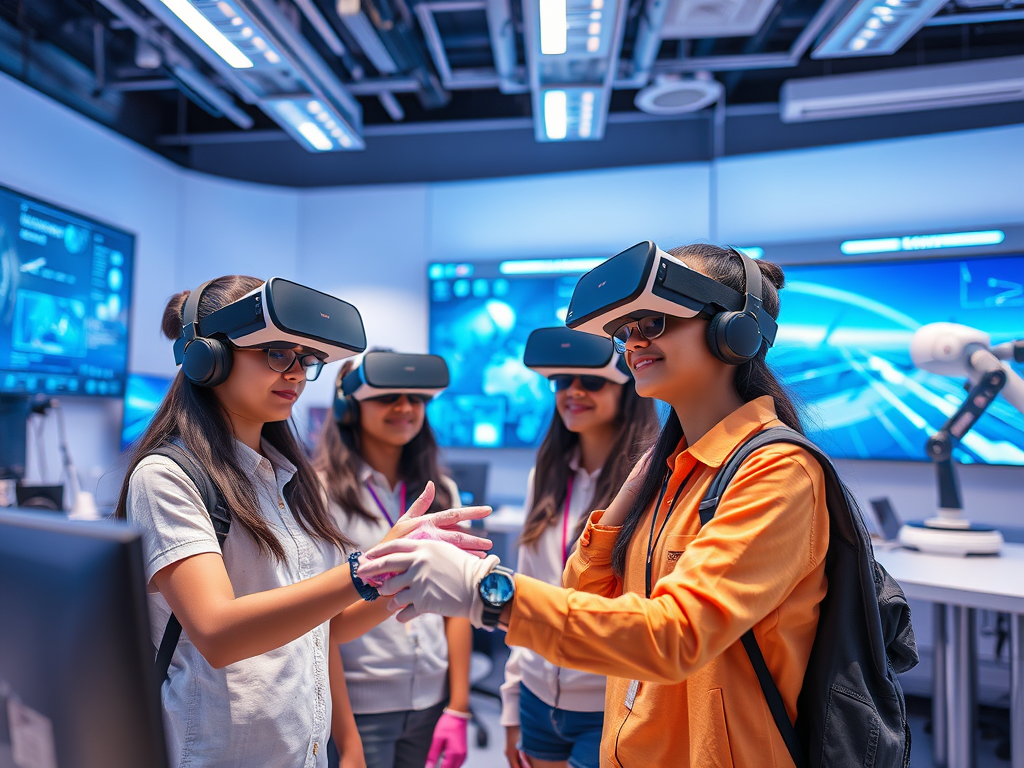
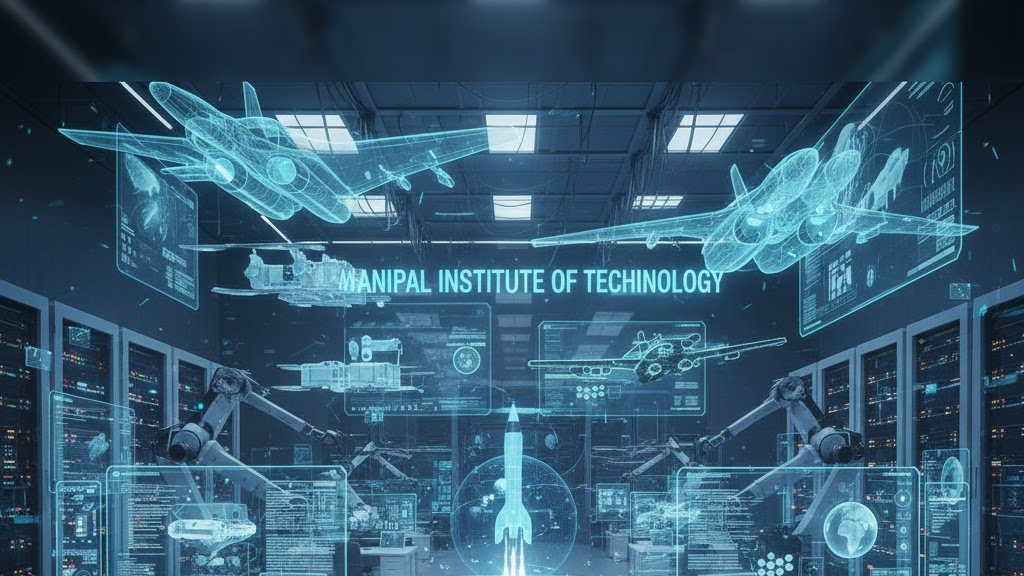
Manipal Institute of Technology (MIT) has taken a bold step by launching India’s first Human-Machine Interaction (HMI) Lab, a state-of-the-art facility that merges AR/VR, haptics, and robotics to redefine aerospace education.
This initiative goes beyond smart classrooms.
It’s about training the next generation of engineers to collaborate with machines, not compete with them.
What Is the HMI Lab?
At its core, the HMI Lab is a cross-disciplinary research and training center.
It focuses on how humans can communicate, control, and co-create with intelligent systems.
The lab integrates:
- Augmented Reality (AR) for cockpit simulation and spatial visualization.
- Virtual Reality (VR) for immersive flight training.
- Haptic Interfaces that allow students to “feel” mechanical forces in virtual space.
- Robotic Systems for automation and precision control experiments.
Together, these technologies create a living ecosystem of digital co-pilots and intelligent assistants where students can design, fly, and test without ever leaving the lab.
Aerospace Education Meets the Metaverse :
Traditional aerospace education has always relied on theory, simulators, and occasional lab demonstrations.
The HMI Lab changes that dynamic completely.
Here, students step inside their equations.
They don’t just calculate lift, they feel it through haptic gloves.
They don’t just view aerodynamics charts, they walk around a virtual jet engine in AR space.
It’s learning through experience and it’s transforming how engineers think about design, simulation, and systems integration.
Why This Matters
1. Filling the Skill Gap
India’s aerospace and defense industries are evolving rapidly, but universities often lag in hands-on training.
By merging digital twins, robotics, and immersive simulations, MIT is bridging academia with real-world aerospace needs.
2. Human-Centric AI
While most AI systems focus on autonomy, HMI emphasizes symbiosis machines that enhance human judgment rather than replace it.
Students learn to design collaborative systems, where human intuition meets machine precision.
3. Empowering Future Innovators
From drone swarms to smart satellites, the future will depend on people who can communicate naturally with intelligent systems.
This lab is a sandbox for that future.
Inside the Lab: A Peek at the Tech
- Mixed-Reality Cockpit Simulator, lets users control virtual aircraft using real-world gestures.
- Haptic Feedback Panels, simulate physical sensations like wind resistance and control-stick tension.
- Robotic Manipulators, replicate precision assembly and maintenance workflows.
- AI-Assisted Design Modules, use generative algorithms to optimize aerostructures in real time.
The result is a seamless blend of the physical and the virtual, turning aerospace labs into interactive playgrounds for innovation.
Academic and Industry Synergy
MIT’s HMI Lab isn’t an isolated academic experiment.
It’s a strategic collaboration with aerospace partners in India and abroad.
Companies like HAL, ISRO, and Airbus India are already exploring partnerships to:
- Develop pilot-training AR/VR modules.
- Test human-robot interfaces for aircraft assembly.
- Co-host AI-aided simulation workshops for professionals.
This bridge between classroom and cockpit could make Manipal aerospace graduates some of the most industry-ready engineers in the country.
The Broader Vision: Humanizing Technology
Technology is evolving faster than our ability to emotionally adapt to it.
By studying how humans perceive, respond to, and trust machines, the HMI Lab plays a crucial psychological role.
Researchers are exploring questions like:
- How much autonomy should a robot have when assisting a human?
- What gestures or feedback feel most “natural” to pilots?
- How can AI systems explain their decisions transparently?
These studies are shaping the ethics and ergonomics of intelligent systems, ensuring the next wave of aerospace innovation remains deeply human.
“Manipal’s HMI Lab turns aerospace education into an immersive experience.”
“The goal isn’t to replace humans with machines, but to make machines human-compatible.”
Final Takeaway: Where Mind Meets Machine
With its Human-Machine Interaction Lab, Manipal Institute of Technology has built more than a research space, it has created a launchpad for the future of learning.
Here, curiosity meets code.
Touch meets technology.
And imagination finally has a physical place to experiment.
As AI, robotics, and immersive systems converge, one truth becomes clear the future of aerospace won’t be built by machines, but with them.
And in that collaborative sky, Manipal just became India’s newest control tower.


 Cybervibe
Leave a comment