
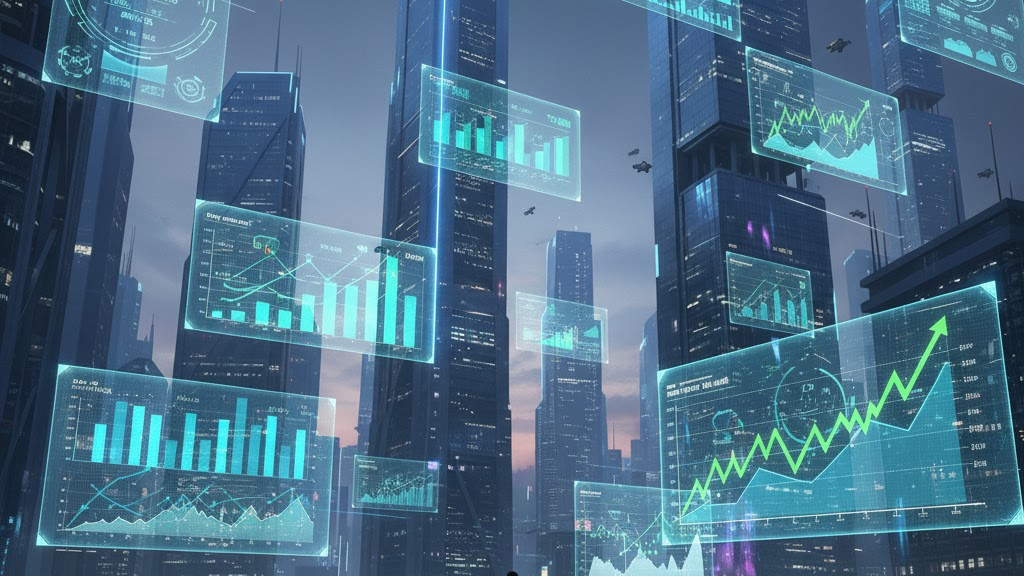
Artificial Intelligence has undeniably become the engine powering America’s latest tech boom. Big Tech companies are reporting record profits, AI startups are scaling faster than ever, and investment into AI infrastructure—from data centers to model training—is exploding. Yet, despite the enormous economic upside, one question looms larger than any technological milestone:
Why does the AI revolution feel so joyless for so many people?
A recent Wall Street Journal report titled “The Most Joyless Tech Revolution Ever” reveals a striking paradox. While AI is making industries more efficient and making tech giants even richer, 68% of Americans say they feel uneasy about AI. That’s a huge red flag for an industry betting trillions of dollars on an AI-driven future.
This unease suggests that the AI boom isn’t merely a story of innovation. It’s a story about trust, anxiety, and a rapidly changing society trying to make sense of what comes next. Let’s unpack why this is happening and what the implications are for technology, business, and the future workforce.
1. The AI Boom Is Creating Wealth, But Not Comfort
The U.S. has been through tech booms before: the dot-com era, the mobile revolution, the rise of social media. Each came with concerns, but each also brought excitement and optimism. AI is different.
While AI is generating billions in market value, the public mood is uneasy. Why?
Because AI is not just transforming industries. It’s transforming people’s sense of security.
Unlike past technologies that expanded human capability, AI often appears to replace it automating tasks, taking over customer service roles, generating content, analyzing data, even coding. Many Americans fear:
- Losing jobs or income
- Being left behind in an AI-dominated economy
- Losing privacy to AI-driven systems
- A world where machines make decisions humans don’t understand
And these concerns aren’t just theoretical. Corporations like Amazon, Meta, IBM, and Google are openly investing in automation to reduce labour costs. AI assistants are replacing entry-level roles, automated customer service systems are replacing call centers, and generative tools are reshaping creative industries.
This creates a psychological tension:
Economic growth is real, but personal benefit feels distant.
It is this disconnect that fuels public distrust.
2. The Trust Gap: People Aren’t Against AI, They’re Against Its Unchecked Power
The biggest misconception is that Americans “hate AI.” That’s not true.
People don’t fear AI itself, they fear what companies might do with it.
Uncertainty about how AI collects data, how it makes decisions, and how companies deploy it has created a significant trust deficit. Surveys show that:
- Many feel AI is being developed too fast
- Few trust corporations to use AI ethically
- Most think regulation is not keeping up
- Many feel AI is already impacting daily life without their consent
AI doesn’t exist in a vacuum. It exists within tech ecosystems that have already damaged public trust, including:
- Big Tech privacy scandals
- Social media misinformation
- Corporate misuse of user data
- Lack of transparency in algorithms
As a result, the public equates AI with more surveillance, more manipulation, and more loss of control, unless strong governance is implemented.
3. The Societal Shift: AI Isn’t Just Tech, It’s Culture
AI is changing the nature of work, creativity, and identity. These aren’t small adjustment, they’re existential shifts.
Workforce Disruption
AI is reshaping industries faster than workers can adapt. Analysts predict that up to:
- 30–50% of tasks in modern jobs can be automated
- Tens of millions of jobs will change or disappear
- New roles will emerge, but require new skills quickly
This creates insecurity, and insecurity breeds anxiety.
Information Crisis
People worry about:
- Deepfakes
- Fake news amplified by AI
- AI-generated misinformation
- Manipulated digital identities
When reality itself becomes questionable, trust collapses.
Ethical Dilemmas
AI brings hard questions:
- Who owns AI-generated content?
- Who is responsible when AI makes a wrong decision?
- Should AI be allowed to replace human judgement?
Without clear answers, people hesitate to embrace AI fully.
4. The Regulatory Pressure: Governments May Step In Hard
As public unease grows, regulatory pressure intensifies.
U.S. lawmakers are openly discussing:
- Mandatory transparency in AI-generated content
- AI safety testing requirements
- Regulations on model training data
- Limits on AI surveillance
- Restrictions on AI in hiring or decision-making
Tech companies fear this because regulation can slow innovation, but ignoring public sentiment can cause even bigger backlash.
Think of it like seatbelts or privacy laws: regulation, once resisted, eventually became essential to restore trust.
5. The Take-Away: AI’s Future Depends on More Than Just Innovation
The lesson here is simple:
AI will only thrive if people trust it.
Companies racing to build the next breakthrough must also build:
- Transparency
- Ethical guidelines
- Clear communication
- Human-centric design
- Workforce upskilling programs
If not, the public will resist and governments will intervene.
The most successful players will be those who understand that AI is not just a technological revolution, but a human one.
Conclusion: The AI Revolution Needs a Human Reset
America is at an inflection point. AI is accelerating faster than any technology in history. The economic gains are real, but the emotional landscape is uncertain. The challenge ahead is not building smarter models, it’s building a more trustworthy, transparent, and human-aligned AI ecosystem.
Because the future of AI doesn’t depend only on what machines can do.
It depends on whether people feel safe living alongside them.
If the tech world can close the trust gap, the AI revolution could become the most empowering in history. But if it ignores the public’s concern, the boom could quickly turn into backlash.


 Cybervibe
Leave a comment