
After nearly two years of explosive momentum, AI-related stocks are beginning to experience something unfamiliar: volatility. In a recent session, the Dow Jones Industrial Average plunged nearly 500 points, with a significant portion of the drop linked to concerns around an emerging AI stock bubble.
While AI continues to transform industries and dominate business strategies, investors are now stopping to ask a crucial question:
Where is the real revenue?
This shift in sentiment marks what analysts are calling a “show-me” phase, a moment when markets want tangible results, not just visionary promises. In this in-depth blog, we explore what’s driving the turbulence, why the correction may be healthy, and how investors (including those in India) should approach the AI sector going forward.
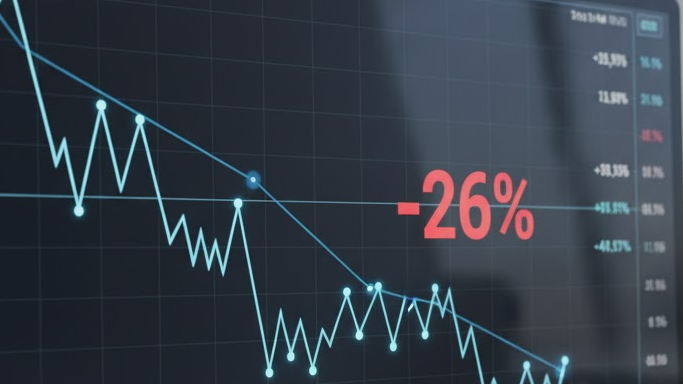
The AI Boom Meets Market Reality
The excitement around artificial intelligence reached extraordinary levels over the past year. Big tech firms, startups, and even traditional industries raced to incorporate AI into their products and pitch decks. Funding surged, valuations skyrocketed, and every company wanted to be “AI-powered.”
But markets move in cycles.
And now, the cycle is shifting.
Why the Dow Fell 500 Points
According to recent market reports, AI-related stocks, including chipmakers, cloud providers, and AI-driven software companies, contributed significantly to the market drop. Reasons include:
- Overvaluation of AI companies without proportionate revenue
- Slowing earnings growth in AI hardware and cloud segments
- Investor fatigue with AI-heavy narratives
- Broader market caution as interest-rate expectations fluctuate
- Profit-taking after months of rapid gains
Analysts warn that markets may have priced in future AI success long before companies actually deliver it. And that gap between expectation and execution is at the heart of the turbulence.
The AI Bubble Question: Is It Real?
Whenever a transformative technology emerges — whether the internet, blockchain, crypto, or clean energy — markets go through predictable phases:
- Discovery (early excitement)
- Acceleration (mass adoption, rising valuations)
- Euphoria (excessive hype)
- Correction (reality check)
- Stabilization (long-term growth and real winners emerge)
AI stocks appear to be entering the correction phase.
This doesn’t mean the AI revolution is slowing, it means the market is recalibrating expectations. Investors now want evidence of:
- sustainable revenue
- real users
- scalable business models
- profitable AI products
- long-term defensible technology
This shift is healthy. It separates vision from execution, and hype from value.
Why AI Companies Are Under Pressure Right Now
To understand the turbulence, it’s important to examine what’s happening beneath the surface.
1. Hardware Overheating: Chipmakers Cooling Down
Chip manufacturers were the biggest winners of the AI boom. High-end GPUs and accelerators became the backbone of AI training and deployment.
But now:
- supply is catching up
- margins are stabilizing
- competition is intensifying
- demand forecasts are normalizing
Valuations that once soared on excitement are now tethered to real production and sales cycles.
2. Cloud Costs Are Outpacing AI Revenues
Companies offering AI services via the cloud face a problem:
Training and running AI models is extremely expensive.
Some AI startups spend millions on infrastructure before making a dollar in profit. Many have:
- high burn rates
- unclear revenue models
- dependence on subsidies from tech giants
Investors are asking whether these economics are sustainable.
3. Too Many Companies Calling Themselves “AI”
Just like the dot-com era, companies are rebranding themselves to ride the trend.
But markets eventually punish companies that:
- overpromise
- exaggerate AI capabilities
- lack genuine innovation
Analysts are now scrutinizing which firms actually use AI meaningfully — and which ones are using it as a marketing buzzword.
4. Regulatory Pressure Is Increasing
Countries worldwide are moving toward AI governance:
- EU AI Act
- US executive orders
- India’s upcoming AI policies
- Global debates on safety and transparency
Regulation often leads to increased compliance costs and slower product rollout timelines, affecting investor confidence.
5. Monetization Is Taking Longer Than Expected
Many companies use AI, but few have successfully monetized it at scale.
Markets now want:
- paid AI products
- recurring revenue
- enterprise adoption
- productivity value
Not just demos or prototypes.
Why This Is Not the End of the AI Boom
Turbulence does NOT mean the AI wave is over.
In fact, it usually means the opposite — that the market is transitioning from early hype to sustainable long-term growth.
Here’s why the future is still strong:
1. AI Adoption Is Still in Early Stages
Only a fraction of businesses have integrated AI into core operations.
2. Enterprise AI Spending Is Rising
Companies are willing to invest in:
- automation
- analytics
- agentic systems
- AI-driven productivity
- cloud acceleration
3. The next breakthroughs are coming
Areas like:
- agentic AI
- multimodal models
- robotics
- autonomous systems
- AI chips
…are on the horizon.
4. AI will restructure every industry
From healthcare to retail, logistics to finance, AI is not optional.
5. Productivity gains are real
AI is already:
- speeding up workflows
- reducing labor-intensive tasks
- improving decision-making
- powering automation
These efficiencies become long-term economic drivers.
What This Means for Indian Investors
India has one of the fastest-growing investor communities, and many closely follow global tech trends. The AI stock correction carries important lessons.
1. Not all AI companies are created equal
Investors should look for:
- real revenue
- working products
- strong fundamentals
- sustainable unit economics
- long-term viability
Avoid companies that:
- rely only on hype
- lack clear business models
- only use AI for branding
2. Indian tech firms may feel the ripple effects
Companies in:
- IT services
- cloud
- software exports
- hardware manufacturing
…may see valuation impacts based on global sentiment.
3. A correction means buying opportunities
Long-term investors often benefit from:
- market dips
- temporary corrections
- panic selling
As long as they choose strong companies.
4. India is building its own AI ecosystem
The country’s investments in:
- semiconductor incentives
- AI startups
- enterprise AI
- automation tools
…could make India a major global player.
5. Diversification is essential
Instead of betting on hype-driven AI stocks, investors should diversify across:
- AI hardware
- AI software
- cloud
- enterprise automation
- infrastructure
This balances volatility with opportunity.
Conclusion: The Market Is Sending a Message, Show Me the Value
The turbulence around AI stocks is not a sign of collapse.
It’s a healthy recalibration of expectations.
The message from investors is clear:
“AI companies must now prove their worth.”
The companies that survive this period will be the ones that deliver real-world results, revenue, and innovation. Those built on hype will fade, just like in every major tech cycle before.
AI remains one of the most transformative technologies of our time, but investors are no longer impressed by big claims alone. They want businesses that:
- solve real problems
- scale sustainably
- generate returns
- innovate responsibly
The AI future is still bright, the market is simply adjusting its lens to see it more clearly.


 Cybervibe
Leave a comment