A Major Hardware Shift in the AI Race
In a move that marks a significant shift in how AI infrastructure is built, OpenAI has partnered with Foxconn to co-design and manufacture key AI hardware components within the United States, particularly in Ohio and Texas.
According to AP News, this collaboration gives OpenAI early access to next-generation hardware as Foxconn ramps up domestic production.
This isn’t just about building more data centers, it’s about controlling the deepest layers of the AI supply chain.
What Exactly Are They Building? A Simplified View
Foxconn will produce critical infrastructure components used to power the next wave of AI systems:
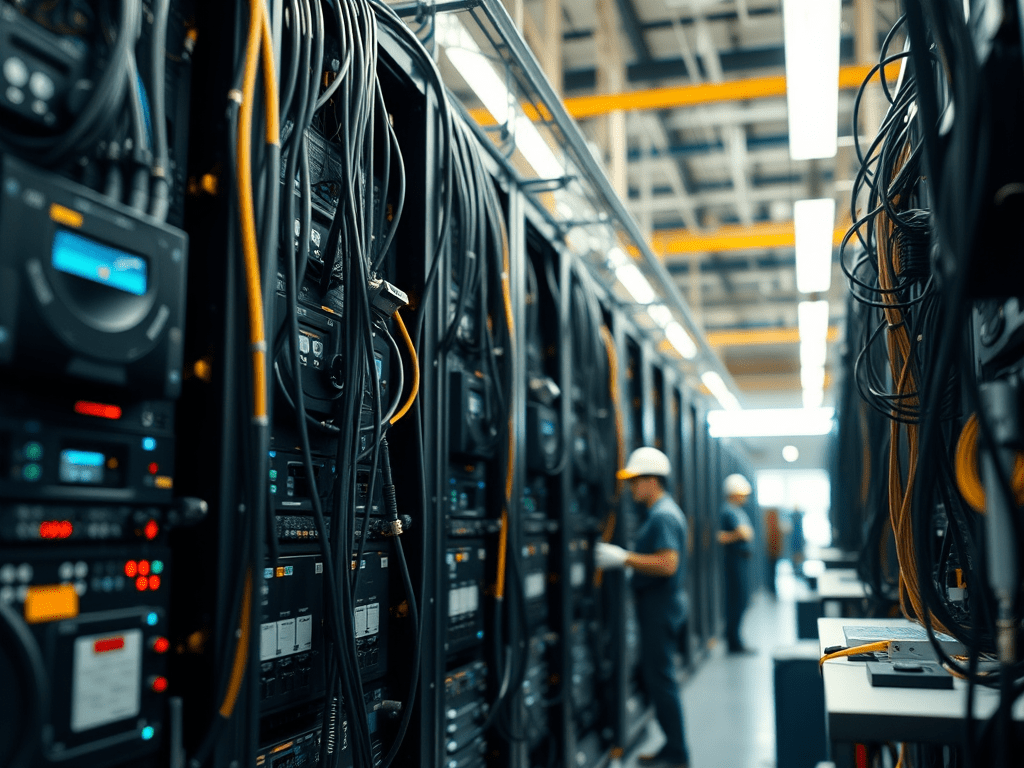
- High-performance cabling
- Advanced networking equipment
- Industrial-grade power systems for large-scale data centers
These are the invisible backbones that allow massive AI models to run efficiently.
As AI models grow larger and require more compute, these components become just as important as GPUs and chips.

Why This Move Matters: Market & Industry Impact
This partnership signals a new competitive frontier in AI: downstream infrastructure.
While chips get most of the headlines, the reality is that data center performance increasingly depends on:
- power efficiency,
- network throughput,
- thermal design,
- and supply chain reliability.
By building hardware domestically, OpenAI:
- reduces dependency on overseas manufacturing,
- secures supply during global shortages,
- speeds up iteration cycles,
- and strengthens its competitive position against players like Google, Meta, and Amazon.
For Foxconn, this expands its role from traditional electronics manufacturing into high-value AI infrastructure.
Global Relevance: AI Geopolitics Meets Supply Chains
This partnership comes at a time when AI is becoming deeply intertwined with geopolitics.
- The U.S. aims to strengthen domestic manufacturing and reduce reliance on Asian supply chains.
- Countries worldwide are racing to secure local AI infrastructure capacity.
- Hardware sovereignty is increasingly seen as a national strategic asset.
As data centers become the “factories” of the AI era, where they are built, and who controls the components, matters more than ever.
Conclusion: The Beginning of a Hardware-First AI Era
OpenAI’s alliance with Foxconn shows that the future of AI dominance won’t be driven by algorithms alone.
It will be shaped by who controls the hardware, the supply chains, and the physical infrastructure that makes AI possible.
With data centers becoming more power-hungry and AI models scaling beyond anything we’ve seen, expect more tech giants to prioritize domestic manufacturing and deeper hardware partnerships.
This is just the beginning of the AI hardware arms race.


 Cybervibe
Leave a comment