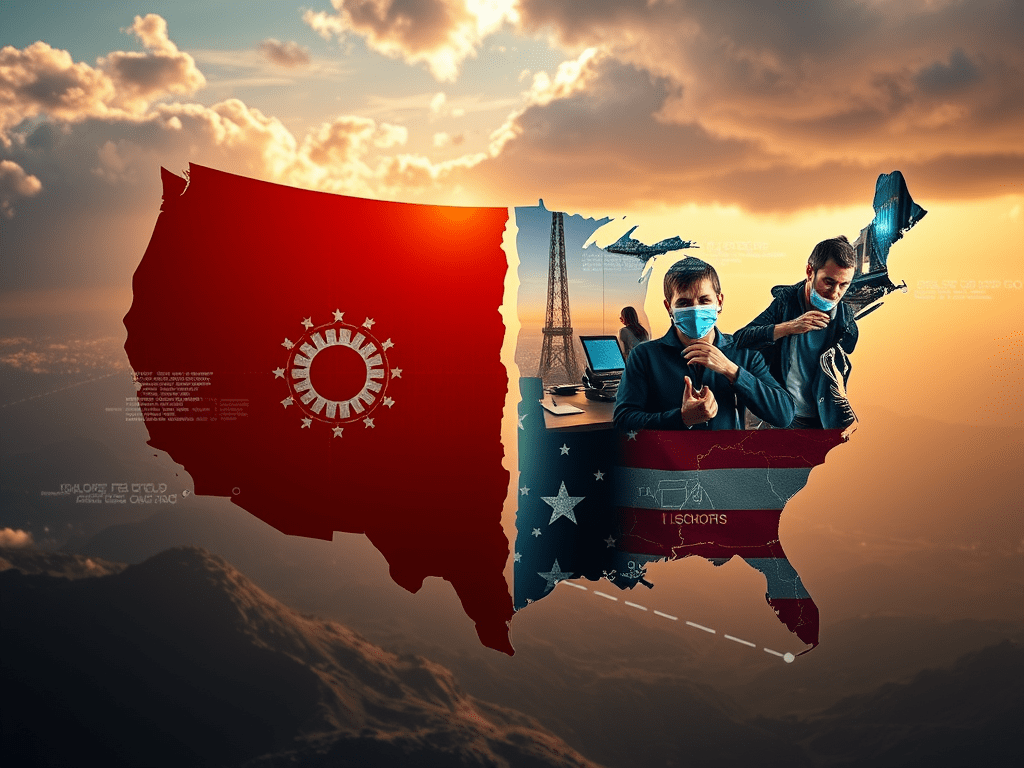
America’s AI Debate is Splitting and Public Trust Is Caught in the Middle
The United States is entering a pivotal moment in AI governance.
As adoption accelerates and automation spreads across industries, the country is increasingly divided on how to regulate AI, with states, policymakers, and industry leaders often taking opposing positions.
At the same time, public unease is rising. The Los Angeles Times reports over 48,000 tech layoffs this year citing AI or automation, shaping a national debate over job security and the future of work.
This is not just a tech story, it’s a societal one.
Summary :
- U.S. regulators and states are moving in different and sometimes conflicting directions on AI policy.
- More than 48,000 tech-sector job cuts in the past year have been linked to AI and automation.
- Public anxiety is climbing around job displacement, safety, fairness, transparency, and bias.
- Governments and companies face pressure to prioritize ethical and responsible AI development, not just innovation speed.

The Deeper Analysis: A Country Split on AI’s Future
America’s AI landscape now resembles a patchwork.
1. Diverging State Regulations
Some states push strict rules on data use, transparency, or model safety. Others adopt a hands-off stance to attract innovation and investment.
This inconsistency is creating friction for companies trying to build nationwide AI systems.
2. Industry vs. Policy Tension
Tech leaders warn that over-regulation may stifle innovation.
Advocates argue that under-regulation risks:
- biased systems,
- unsafe deployments,
- misinformation,
- and public harm.
The debate has shifted from “what can we build?” to “what should we build?”
3. Job Cuts Add Fuel to Public Anxiety
As automation spreads, many Americans fear being replaced.
AI is now blamed not only for job displacements, but also for accelerating inequality if benefits accrue to only a few.
This anxiety is shaping public sentiment, political pressure, and regulatory urgency.
Impact & Implications
A. Companies Must Prioritize Responsible AI
Fairness audits, safety evaluations, transparent policies, and human oversight are becoming essential, not optional.
B. New Jobs Will Emerge, But Transitions Will Be Tough
AI will create new roles in oversight, engineering, and strategy.
But the transition from old jobs to new skills will be uneven and uncomfortable.
C. Regulation Will Define Competitive Advantage
Companies that adapt early to regulatory expectations will scale faster and face fewer hurdles later.
Global Relevance
The U.S. regulatory divide mirrors a global pattern:
- Europe pushes strict AI rules.
- Asia adopts faster, industry-friendly frameworks.
- Developing economies face major workforce risks.
As countries choose their regulatory paths, the global AI landscape will likely become fragmented, influencing everything from cross-border data flows to global competitiveness.
Conclusion: The Next Phase of AI is About Trust
Innovation alone is no longer enough.
The winners in the AI era will be the companies and governments that build trust, address public concerns, and demonstrate responsible, transparent AI practices.
The U.S. stands at a crossroads, and the decisions made now will shape how AI affects jobs, society, and democracy itself in the decade ahead.



 Cybervibe
Leave a comment