
Introduction: A Bottleneck That’s Reshaping the Future of AI
A global AI chip crunch is tightening faster than expected, and the world’s biggest cloud providers are reacting decisively. Amazon, Google, Tesla, and Oracle have begun securing 2026 chip supply years in advance, placing multi-billion-dollar pre-orders with NVIDIA, AMD, and a growing wave of AI-chip startups.
This unprecedented race for compute power signals a new reality: the companies that control hardware capacity will control the next era of AI innovation.
Recap :
- Severe global shortage of high-performance AI chips.
- Cloud giants place early 2026 orders worth billions to secure supply.
- NVIDIA, AMD, and next-gen chip startups see historic demand spikes.
- AI infrastructure becomes the new battleground for dominance.
Simplified Explanation of the Tech
AI systems require specialised chips, far more powerful than normal processors, called GPUs (graphics processing units) and AI accelerators.
These chips:
- Train and run massive AI models (like GPT-style LLMs)
- Perform trillions of operations per second
- Consume huge amounts of compute and energy
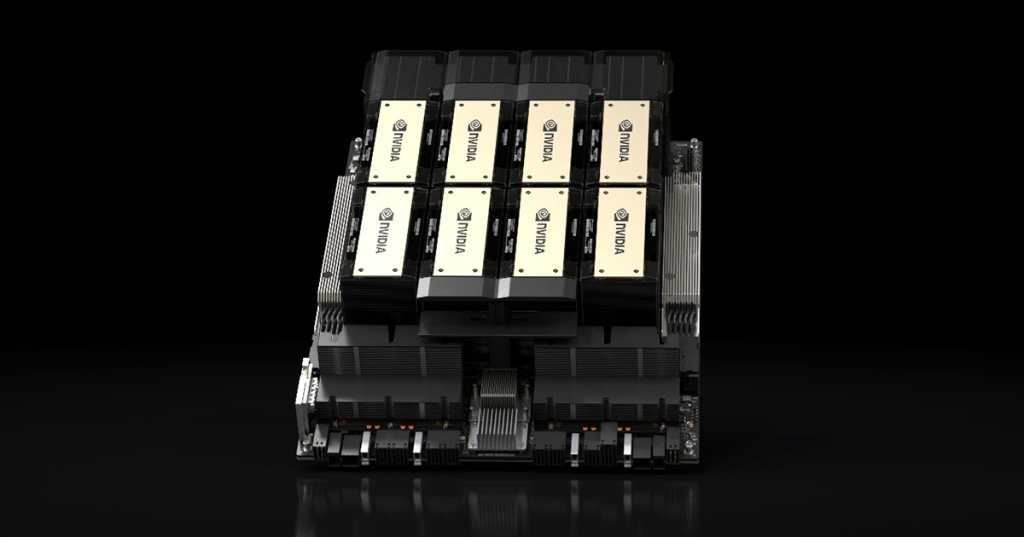
NVIDIA dominates this space with its H-series AI GPUs. AMD is catching up with its MI series. Startups like Groq, Cerebras, SambaNova, and Tenstorrent offer alternative architectures.
But building these chips is extremely complex and slow, which is why demand now far exceeds supply.

Deeper Analysis
The chip shortage is no longer a hardware issue, it’s a strategic power struggle.
1. Cloud providers fear being left behind
Companies like Amazon Web Services, Google Cloud, Tesla, and Oracle rely heavily on AI chips to train models, operate AI services, and build autonomous systems. If they can’t secure chips early, they risk falling behind competitors.
2. NVIDIA’s dominance increases leverage
With over 80% market share in AI GPUs, NVIDIA now controls the most valuable resource in tech. This lets the company prioritise large, long-term contracts, squeezing smaller companies and startups out of the queue.
3. Startups gain attention but face scaling challenges
Chip innovators are offering new architectures that promise greater speed and lower cost, but they also need manufacturing capacity, which is heavily concentrated in Taiwan and South Korea.
4. The AI economy now depends on silicon availability
Without chips, there is no training, no inference, no generative AI, no autonomous robotics. Chip shortages can slow entire industries.
Market & Industry Impact
Short-Term Impact
- AI-driven companies may delay product launches
- Prices for cloud AI compute will rise
- NVIDIA’s revenue surges further
- Startups scramble for manufacturing access
Long-Term Impact
- Cloud providers will build their own custom AI chips
- Chip production may expand into the U.S., India, and Europe
- Demand from autonomous vehicles, robotics, and agents will triple
- “Compute inequality” may emerge, only the richest companies get access
Global Relevance
This isn’t just a Silicon Valley problem. The shortage affects:
- Governments building national AI infrastructure
- Developing countries trying to adopt AI at scale
- Tech startups worldwide unable to afford scarce GPU slots
- Academic labs falling behind due to lack of compute
The AI ecosystem is now fundamentally tied to global supply chains, from Taiwanese fabs to U.S. cloud giants to Middle-East sovereign AI projects.
Conclusion: The Era of Compute Power Has Begun
With billion-dollar pre-orders for 2026 chips already underway, one thing is clear: AI leadership will be defined by compute capacity, not just clever algorithms.
Expect to see more:
- Long-term chip contracts
- Multi-country manufacturing alliances
- Custom silicon from every major tech company
The race for AI dominance is now a race for hardware, and the competition is just beginning.


 Cybervibe
Leave a comment