
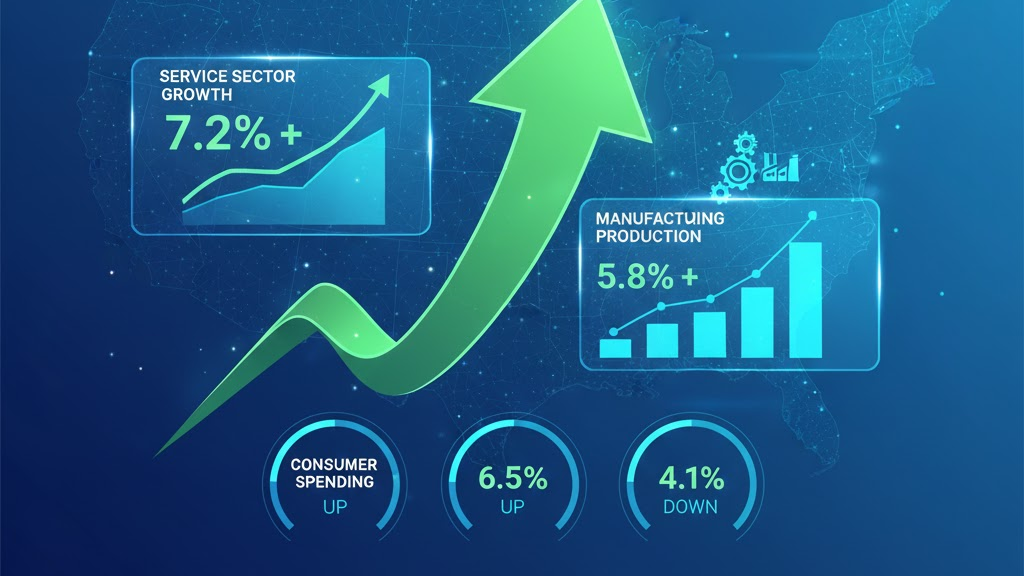
After a historic 43-day federal government shutdown, the U.S. economy is showing signs of renewed momentum. According to the latest S&P Global flash survey, the services sector index jumped to 55, marking its fastest expansion in the last four months. Manufacturing also grew, though more modestly, reaching 51.9, a figure that signals expansion but at a slower pace.
These numbers matter: any reading above 50 indicates growth, and combined, they suggest that the U.S. economy may be shaking off the drag caused by the prolonged political standoff in Washington.
But while business leaders are expressing a new wave of optimism, fueled by expectations of lower interest rates, improved demand, and increased spending, economists remain cautious. The recovery is real, but it’s far from uniform.
A Closer Look at the “Post-Shutdown Bounce”
1. Services Lead the Comeback
The U.S. economy is heavily powered by services, from healthcare and retail to finance and hospitality.
A jump to 55 indicates:
- stronger consumer demand
- businesses reporting more orders
- improved confidence in future growth
This is significant, especially after the shock of the shutdown, which stalled spending and froze government-linked economic activity.
2. Manufacturing Rebounds, But More Slowly
Manufacturing’s rise to 51.9 reveals a fragile recovery.
Why the slower pace?
- high input costs
- supply chain pressures
- lingering trade tariffs
- cautious investment by manufacturers
Manufacturing is improving, but it isn’t driving the rebound, it’s following.
Why the Shutdown’s End Sparked Optimism
The 43-day shutdown rattled markets, disrupted public services, stalled federal contracts worth billions, and eroded business confidence. Its end has allowed:
- federal spending to resume
- government contracts to restart
- regulatory processes to move again
- agencies to fully reopen
For many industries, especially tech, defense, transport, and healthcare, federal activity is essential.
The moment Washington reopened, economic gears began turning again.
What Business Leaders Are Saying
Executives across sectors report:
- better hiring plans for 2026
- expectations of lower interest rates
- hopes for stronger consumer demand
- more willingness to invest in expansion or tech upgrades
This sentiment matters because business optimism often translates into:
- higher investment
- increased job creation
- more capital spending
Confidence is an economic driver in itself.
But It’s Not All Good News, The Recovery Has Caveats
Despite the positive indicators, economists warn there are several challenges to watch closely.
1. Rising Costs
Businesses continue to face:
- high wages
- elevated energy prices
- expensive raw materials
Cost pressures could limit profit margins and slow hiring.
2. Trade Tariffs Still Bite
Ongoing tariff policies are slowing manufacturing growth and raising import costs.
This impacts:
- automotive
- semiconductors
- machinery
- consumer goods
Until trade tensions ease, manufacturing will struggle to regain full momentum.
3. Services Growth Isn’t Enough
The service sector is powering ahead, but the economy works best when both services and manufacturing rise together.
Right now, the expansion is imbalanced.
4. Consumer Sentiment Remains Weak
Even with business optimism rising, U.S. consumers remain cautious.
High prices, high interest rates, and affordability issues continue to slow spending in many households.
What This Means for 2026
Economists expect:
- moderate but steady economic growth
- cooling inflation
- potential rate cuts from the Federal Reserve
- improved business investment
- slower improvement in manufacturing
If interest rates fall and global demand rises, the momentum could accelerate.
But if costs stay high or geopolitical tensions escalate, the recovery could lose steam.
Conclusion: A Promising Recovery, But Not a Perfect One
The end of the shutdown has undeniably injected energy back into the U.S. economy. The sharp rise in services activity and the steady improvement in manufacturing show that businesses are regaining traction.
But the recovery is complex, uneven, and influenced by external pressures, from global supply chains to domestic cost structures. The U.S. may be entering a phase of renewed stability, but policymakers and businesses still need to navigate inflation, tariffs, and consumer uncertainty.
The rebound is real, but the road ahead still has bumps.


 Cybervibe
Leave a comment