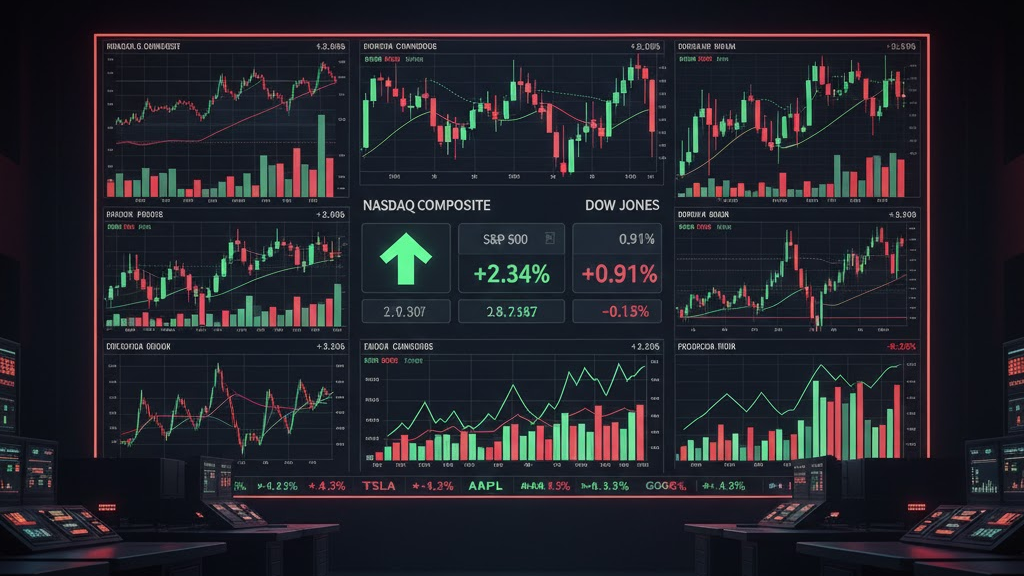
The global AI boom has fueled record-breaking growth for companies like Nvidia, cloud providers, and AI software firms.
But beneath the excitement, a growing number of analysts are asking a difficult question:
Is the AI surge moving faster than real productivity gains?
In a commentary titled “The AI maths is broken”, reported by Hindustan Times, experts warn that the numbers fueling today’s AI rally may not align with the underlying fundamentals. While revenues are soaring for key hardware suppliers, the broader ecosystem may not yet be seeing equivalent real-world value creation.
This raises the possibility of an AI market correction, or what some are calling the early signs of an AI bubble deflating.
The Core Concern: Valuations vs. Real Output
The AI industry’s valuations have skyrocketed in the past two years:
- Nvidia becoming the fastest company to hit trillion-dollar milestones
- AI startups raising billions with unfinished products
- Massive pre-orders for chips, clusters, and supercomputers
- Cloud AI spending accelerating year after year
However, analysts argue that productivity gains across industries have not yet caught up.
The mismatch may look like this:
Revenues in AI hardware → very high
Real efficiency gains in enterprises → still modest
AI adoption → accelerating
Productivity transformation → slower than predicted
This imbalance is what some analysts call “broken AI math.”
Why Analysts Worry About Overheating
1. Companies are spending massively, often ahead of ROI
Firms are investing in GPUs, AI clusters, and model development without clear evidence of long-term returns.
2. Many AI pilots haven’t scaled
Automations are promising but not yet delivering the macro-level productivity we saw with cloud or mobile revolutions.
3. Stock valuations reflect future perfection
Market expectations assume flawless execution and continuous AI breakthroughs, a risky assumption.
4. Supply chain spending is huge
Billions are flowing into chips, data centers, and energy infrastructure. But operational benefits lag behind.
5. AI hype cycles have historically been volatile
Previous technology booms, dot-com, blockchain, VR show how market optimism can overshoot reality.
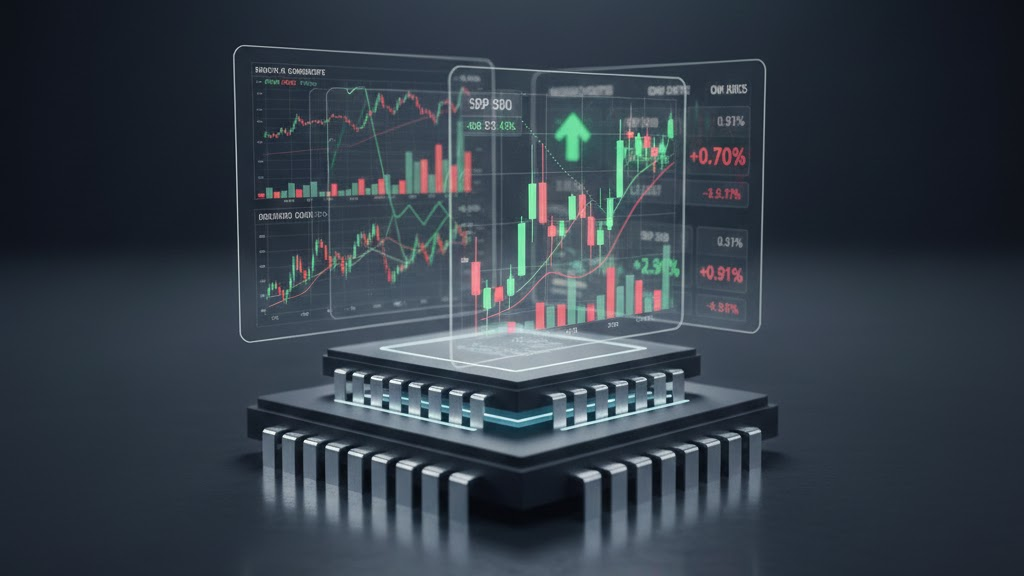
Is This an AI Bubble? Maybe Not, But Corrections Are Normal
It’s important to understand that a correction doesn’t mean AI is going away.
It simply means:
- capital will reallocate,
- hype-driven spending will slow,
- only proven use cases will survive,
- weak players will consolidate or exit.
AI is a transformative technology, but all transformative technologies go through cycles.
What typically happens in tech cycles?
- A hype wave
- Aggressive investment
- Market correction
- Sustainable long-term growth
We may currently sit between phases 2 and 3.
Why AI Is Still a Long-Term Bet
Even with concerns, most analysts agree:
- AI will reshape industries
- new business models will emerge
- automation efficiencies will compound
- scientific research will accelerate
- knowledge work will fundamentally change
But timelines may be longer and payoffs more complex than early investors expect.
In short:
AI is real.
The hype is real.
But the returns may take longer than the hype cycle predicts.
Conclusion
The AI economy is booming, but it’s also at risk of overheating.
As analysts warn, the gap between financial expectations and actual productivity gains could lead to a market correction. The challenge now is ensuring that investment momentum is matched by genuine innovation, proven use cases, and measurable impact.
The AI revolution isn’t disappearing, but it may be entering its first reality check.


 Cybervibe
Leave a comment