As AI adoption accelerates across industries, so do the digital threats that come with it. According to MoneyWeek, cybersecurity is now one of the fastest-growing investment and innovation sectors, driven by the rise of AI-enabled attacks and the looming challenges of the post-quantum era.
The reality is simple:
Old security systems were not built for a world dominated by generative AI, autonomous agents, advanced malware, or quantum-level computing power.
Companies, governments, and entire industries are now racing to upgrade their digital defenses.
Why Cybersecurity Is Entering a New Era
With AI becoming integrated into every workflow, cyberattacks have become more automated, more sophisticated, and more scalable. Bad actors no longer need deep technical skill, AI tools now generate:
- Highly convincing phishing emails
- Deepfake audio and video
- Automated malware and ransomware
- Social engineering attacks
- Large-scale credential theft
- Rapid vulnerability scanning
AI is a double-edged sword: the same technology that boosts productivity also gives attackers unprecedented power.
This shift is why cybersecurity has become one of the hottest domains for investment, with companies expanding their budgets for threat detection, encryption, compliance, and intelligence systems.
AI-Enabled Attacks: Faster, Smarter, More Dangerous
AI has transformed cybercrime in ways that traditional firewalls and antivirus tools struggle to handle.
1. Hyper-Personalized Phishing
AI can generate emails that mimic writing styles, internal communication patterns, or even CEOs’ tones making phishing more convincing than ever.
2. Automated Vulnerability Exploits
Attackers use AI to scan networks and exploit weaknesses at extreme speed, sometimes in minutes.
3. Deepfake Fraud & Identity Theft
Voice-cloning and facial deepfakes enable financial scams, corporate fraud, and political manipulation.
4. Self-Updating Malware
AI-powered malware can learn from defenses, evolve, and bypass outdated security measures.
5. Large-Scale Attack Automation
Cybercriminals can now run hundreds of attacks simultaneously with minimal effort.
This is why organizations are urgently adopting AI-driven cybersecurity to fight AI with AI.
The Rise of Post-Quantum Security
One of the biggest upcoming threats is quantum computing.
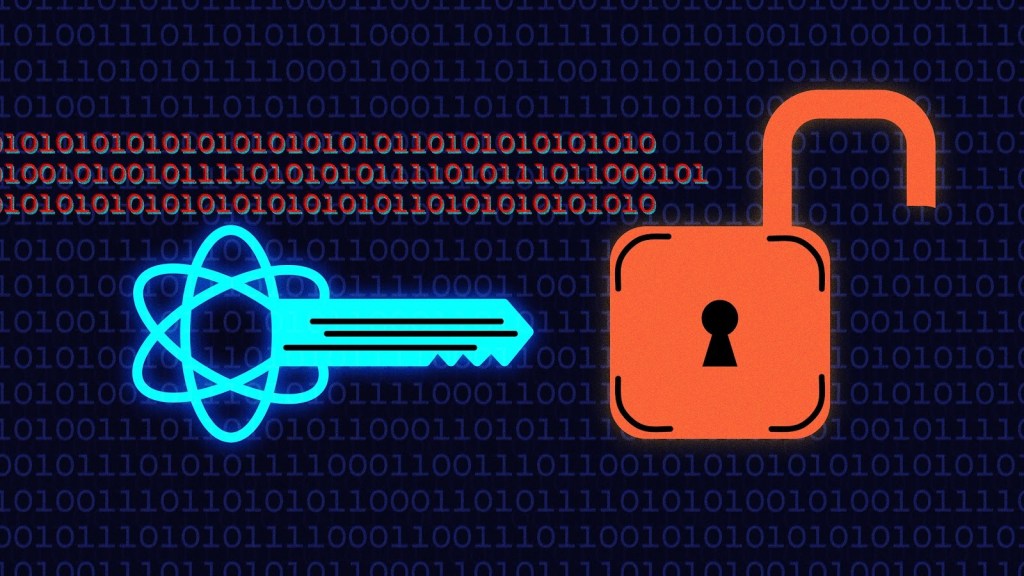
Quantum machines won’t just break encryption faster, they may break most of today’s encryption entirely.
Traditional cryptographic methods, like RSA and ECC, could become obsolete once quantum computers reach full capability. This has triggered a global shift toward post-quantum cryptography (PQC).
What Is Post-Quantum Security?
Post-quantum security includes algorithms and encryption methods designed to resist quantum attacks.
Why It Matters
- Future-proofing sensitive government and corporate data
- Protecting long-term encrypted archives
- Securing financial systems, healthcare data, and infrastructure
- Preparing for “harvest now, decrypt later” attacks (hackers stealing encrypted data today, planning to decrypt it when quantum computers mature)
Countries like the U.S., Japan, India, and EU nations are already pushing for quantum-safe security standards.
Quantum Cryptography & Quantum Key Distribution (QKD)
Quantum cryptography, especially Quantum Key Distribution (QKD) is gaining traction as one of the most secure communication methods ever invented.
Why QKD Is Revolutionary
- It uses quantum particles (photons) to generate encryption keys.
- Any interception attempt automatically changes the particle state.
- This makes eavesdropping detectable and prevents key theft.
Banks, military networks, telecom operators, and research labs are early adopters.
Quantum cybersecurity may become the new gold standard in the next decade.
Edge-Computing Security: Protecting Devices at the Source
As IoT devices and remote sensors explode in number, edge-computing security is becoming essential.
Old models focused on protecting centralized servers.
But today, data is generated everywhere: cameras, cars, factories, wearables, satellites.
Edge security focuses on:
- Securing devices at endpoints
- Running AI models locally for real-time threat detection
- Preventing attacks before data reaches the cloud
This shift is critical to protecting billions of new smart devices entering the market.
Why Cybersecurity Is Becoming a Top Investment Sector
Companies now realize cybersecurity is not an IT expense, it’s a core business survival strategy.
Investments are rising in:
- Zero-trust security models
- Real-time AI threat detection
- Identity & access management (IAM)
- Cloud-native security
- Secure-by-design software tools
- Post-quantum encryption
- Cyber insurance
- Data privacy platforms
Every organization big or small, understands that security is not optional anymore.
Security Must Evolve as Fast as AI
We are entering the AI-era and quantum-era at the same time, two of the biggest technological shifts of the century. This combination creates extraordinary opportunities, but also unprecedented risks.
The cybersecurity landscape is being reshaped by:
- AI-enabled attacks
- Increasing complexity of digital networks
- Quantum threats on the horizon
- Billions of IoT devices
- Remote and hybrid work models
- Sophisticated criminal networks
To survive this next era, companies must adopt AI-driven security, quantum-resistant encryption, and next-generation threat detection.
The message is clear:
Security can’t remain in the past while threats move into the future.


 Cybervibe
Leave a comment