

A powerful transformation is sweeping across the global technology ecosystem. As artificial intelligence accelerates into every corner of industry, the landscape is undergoing massive restructuring. Some companies are soaring as AI-driven demand explodes, while others, once dominant in older hardware or legacy service sectors, are scrambling to adapt.
Meanwhile, pure-play semiconductor firms and chip-design specialists are experiencing a renaissance, with renewed investor attention and stronger financial outlooks. This shift is reflected in recent market developments, including Microchip Technology’s boosted forecast and the strategic Nvidia–Synopsys investment tie-up.
Together, these moves highlight a fundamental truth:
AI is not just a trend. It is reorganizing the hierarchy of the tech world.
This blog explores how different players are navigating this shift, the winners, the survivors, and the companies reinventing themselves in a rapidly changing digital economy.
The AI Boom Is Creating a New Class of Winners
The rise of AI has unleashed unprecedented demand for:
- High-end GPUs
- Advanced semiconductor design tools
- Power-efficient microcontrollers
- High-speed networking systems
- AI-optimized data-center hardware
This surge has propelled several companies into the spotlight.
1. Nvidia: The Epicenter of the AI Hardware Revolution
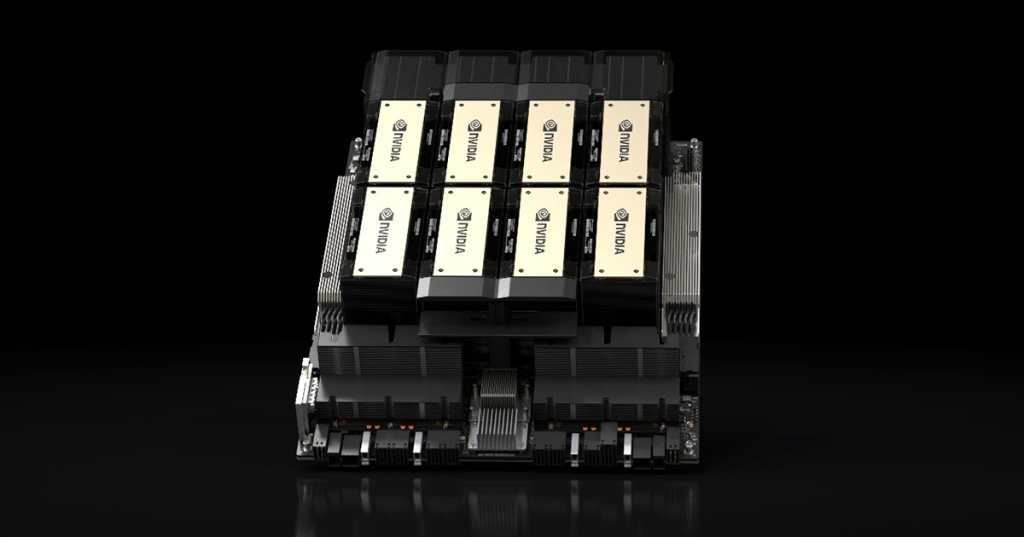
Nvidia continues to dominate the global AI supply chain, its GPUs and accelerated computing platforms becoming the backbone of AI training, cloud services, and enterprise deployments.
But what’s changing now is not just demand, it’s the ecosystem forming around Nvidia.
The company’s recent $2 billion investment in Synopsys shows that Nvidia is expanding beyond chips and into the tools that design chips.
This suggests a world where Nvidia isn’t merely a supplier, but a foundational architect of AI infrastructure.
Chip-Design Firms Surge Back Into Relevance
For years, many chip-design and electronic design automation (EDA) companies operated quietly behind the scenes. Investors focused more on high-profile device makers, cloud giants, or smartphone brands.
But the AI boom changed everything.
EDA firms are now mission-critical.
Why?
Because designing advanced AI chips and semiconductors requires:
- Faster design cycles
- Automated layout optimization
- AI-guided verification
- Tools that can handle trillions of transistors
Companies like Synopsys, Cadence, and ARM are suddenly in the center of global semiconductor strategy.
Nvidia–Synopsys example
Nvidia’s investment underscores a new reality:
- AI chips can no longer be designed with yesterday’s tools
- Integration between AI workloads and silicon architecture must be deeper
- The next generation of chips will require AI-assisted design from day one
This renewed attention is pushing EDA firms into a new growth cycle one they haven’t experienced at this scale for decades.
Microchip Technology: A Bellwether for AI-Driven Electronics Demand
One of the clearest reflections of shifting market momentum is Microchip Technology’s raised earnings forecast for Q3 2025.
Microchip, a major supplier of microcontrollers and analog chips, is seeing:
- Higher orders
- Improved visibility
- Stronger demand across automotive and industrial sectors
This signals that AI demand isn’t limited to GPUs and data centers, it’s also reshaping the embedded electronics landscape.
AI is pushing demand deep into electronics manufacturing
Industries requiring Microchip’s expertise include:
- Autonomous and electric vehicles
- Smart factories
- Robotics
- Edge computing
- IoT infrastructure
As more devices become AI-enabled, companies like Microchip gain strategic importance.
Legacy-Tech and Older Hardware Firms Are Being Forced to Evolve
Not everyone is thriving. Some companies that relied heavily on:
- Legacy enterprise hardware
- On-premises servers
- Outdated software models
- Older telecom infrastructure
- Commodity PC components
are facing flattening demand.
Why?
Because AI-driven transformation is shifting customer priorities. Enterprises no longer want traditional hardware they want:
- AI acceleration
- Cloud scalability
- Real-time processing
- High-efficiency chips
- Intelligent automation
This is prompting a major adaptation cycle.
Examples of adaptation trends
- Older hardware vendors pivoting to AI-enhanced servers
- Telecom companies shifting toward AI network optimization
- PC component manufacturers exploring edge AI devices
- Enterprise software firms integrating AI copilots
Companies that fail to adjust risk becoming irrelevant in the AI-first era.
The Market Is Splitting Into Two Lanes
Lane 1: AI Hyper-Growth Leaders
These are companies gaining significant momentum:
- GPU and accelerator manufacturers
- Semiconductor design firms
- Cloud AI providers
- Data-center infrastructure companies
- Advanced networking solution providers
These firms are expanding aggressively, raising capital, and investing in next-gen architectures.
Lane 2: The Adapters
These include:
- Legacy enterprise hardware companies
- Traditional electronics firms
- Older chip makers without AI specialization
- Service providers tied to outdated infrastructures
They are not collapsing, but they are pivoting out of necessity.
Those that successfully shift into AI-driven product lines will survive; others risk shrinking relevance.
Why Investors Are Rewarding Chip and Design Firms
AI has redefined what drives value in tech. Instead of prioritizing brands, apps, or consumer services, investors now prize:
- Silicon innovation
- Computational efficiency
- Chip design intelligence
- Infrastructure scalability
This explains why:
- Chip stocks are hitting new highs
- EDA firms are gaining institutional attention
- Semiconductor manufacturers are forecasting stronger growth
Investors understand that AI starts at the silicon level and the companies building that foundation will shape everything else.
The Beginning of a New Industrial Era
The shifts we’re seeing today resemble previous industrial revolutions:
- Electricity reshaped manufacturing
- Oil reshaped transportation
- Software reshaped computing
AI is reshaping the semiconductor, hardware, and design ecosystem.
The winners will be companies that:
- Build AI-optimized chips
- Create the tools to design these chips
- Construct AI-ready infrastructure
- Supply embedded components for intelligent machines
Those unable to evolve will fade.
Conclusion: AI Is Redrawing the Tech Map And the Next Decade Will Belong to Infrastructure Builders
We are witnessing a realignment of the tech sector unlike anything since the rise of the internet.
- GPU giants like Nvidia dominate the new AI economy
- Chip-design firms like Synopsys gain strategic importance
- Manufacturers like Microchip see rebounding demand
- Legacy hardware/services firms are adapting or shrinking
In the AI-first world, the most valuable companies are those building the foundations, not just the applications.
The next decade will likely be defined by:
- Smarter chips
- Faster design cycles
- Larger data centers
- Embedded intelligence everywhere
And the companies that master this infrastructure will lead the new digital era.


 Cybervibe
Leave a comment