
At a recent Reuters NEXT conference, Aidan Gomez, CEO of Canadian-based AI firm Cohere made waves with a bold statement: although many nations (notably China) have advanced AI models, the real measure of dominance today is who can build, scale, and commercialize AI globally. According to Gomez, that advantage rests with liberal democracies such as the United States and Canada.
In his words, “It’s not who gets the technology first, but who commercializes it at scale.”
That framing reflects a larger shift in the so-called “AI race”: from a competition over raw research and model performance to a race of adoption, deployment, trust, and enterprise integration. Below I explore what Gomez’s argument means for AI, for geopolitics, and for the future of global technology.
From Research to Real-World AI: What’s Changed
In the early years of generative AI and large language models (LLMs), many judged progress by who had the biggest model: bigger parameters, more compute, more sophisticated training. That fueled a furious push globally, labs, companies, and governments raced to build ever more powerful models.
But as of 2025, that paradigm is shifting. According to Gomez and others in the field, the marginal gains from simply scaling up models further are diminishing. What really matters and what will betray long-term winners, is who can deploy, integrate, and operate AI at commercial scale across industries and countries.
This means enterprise AI: embedding intelligent systems into real businesses, finance, healthcare, manufacturing, supply chain, public sector, and more. It means compliance with regulations, building trust among governments and clients, and offering stability and reliability. This is a very different game than merely publishing a headline-grabbing new model.
Why U.S. and Canada Are Poised to Lead
According to Gomez, certain structural advantages give liberal democracies, particularly the U.S. and Canada a major edge in this new phase of AI.
Enterprise-ready AI infrastructure & deep commercial ecosystems
The U.S., backed by decades of private investment and developed tech infrastructure, hosts many of the world’s largest cloud providers, data-centres, and enterprise-software ecosystems. That makes it easier to deploy robust, scalable AI solutions. Data from recent analyses shows the U.S. leads sizable chunks of private AI investment, enterprise AI adoption, and global commercial AI usage.
Global trust and geopolitics matter
Gomez pointed out another factor: trust. Many liberal democracies and global enterprises are wary of adopting critical infrastructure technology from regimes or providers seen as politically risky. According to him, if you’re going to choose a partner for transforming an economy, you’ll likely choose a liberal democracy.
That makes governments and corporates more willing to partner with U.S. or Canada-based AI firms giving them a head start in global deployment.
Focus on business-oriented AI not just research
Cohere itself is an example: rather than chasing bleeding-edge model breakthroughs, it has emphasized enterprise-ready AI services, tools built for actual problems in regulated industries such as finance, healthcare, manufacturing, and energy.
Gomez argued that pouring ever more billions into marginal model improvements doesn’t always translate into real-world benefit. Real progress, in his view, comes from practical, usable, business-focused AI.
But the Competition Isn’t Over And Others Are Still Gaining Ground
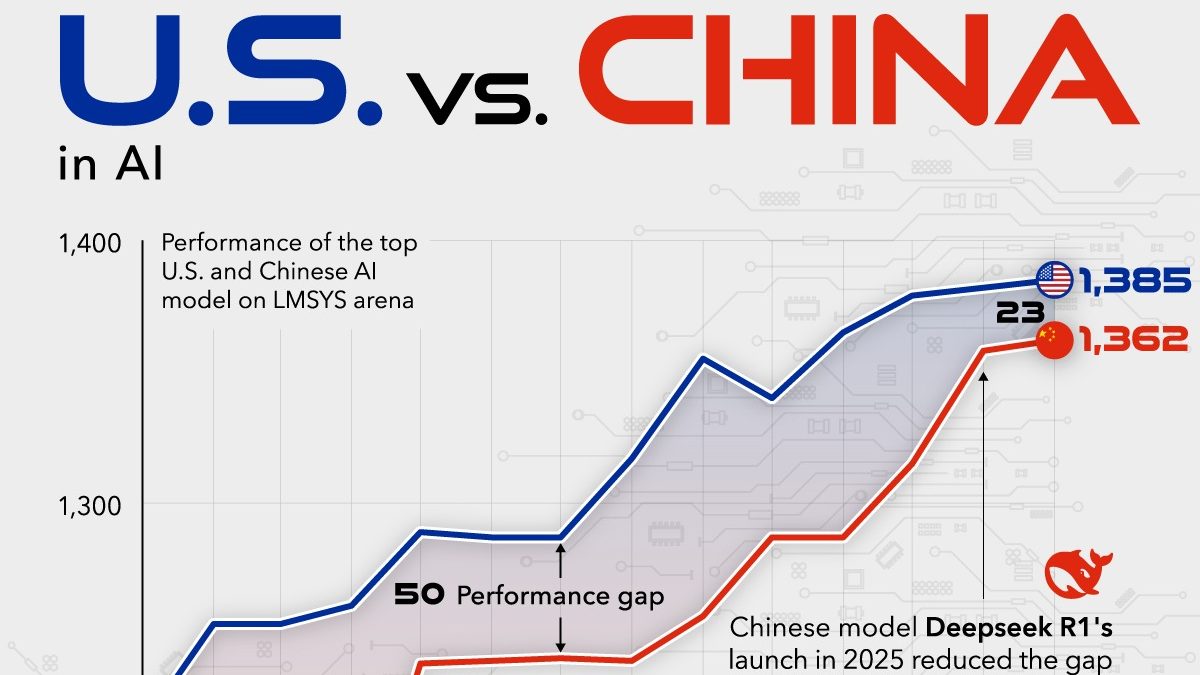
It would be incorrect or overconfident, to assume the lead is unassailable. Indeed, other players, especially China, remain formidable competitors. Several factors show why the global AI race remains fiercely contested:
- According to policy-analysis research, China is pursuing a full vertical AI stack: from chips and compute to applications, leveraging state support, subsidies, and coordinated policy models quite different from Western private-market driven AI growth.
- The same reports suggest China’s approach, especially in sectors like manufacturing, robotics, electric vehicles, and hard-tech, can yield efficiencies and scale advantages when AI is applied to physical infrastructure.
- As some academic studies note, China’s share in number of AI publications and research output has grown rapidly in recent years.
In other words: while the U.S. & Canada might lead in commercial worldwide deployment of AI services today, the gap is narrowing, and the balance could shift depending on regulation, geopolitics, and industrial strategy.
What This Means for Businesses, Governments, and AI Users
For Businesses
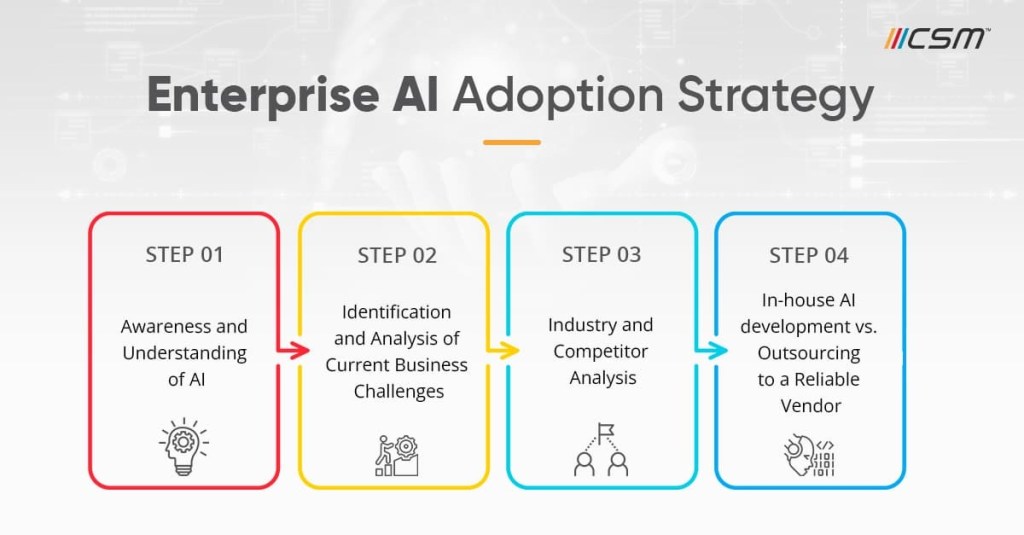
Firms looking to integrate AI have to think beyond just proof-of-concepts. The real winners will be those who build sustainable, regulatory-compliant, scalable AI services. Companies rooted in the U.S. and Canada may have the infrastructure, funding, and global trust, which might make them safer long-term partners for international enterprises.
For Governments & Regulators
The “AI race” is no longer only about national prestige or cutting-edge research, it’s about sovereign digital infrastructure, data governance, and trusted vendor selection. Democracies that emphasize privacy, transparency, and regulation-friendly deployment could see more adoption globally.
For Users and the Public
Broad deployment of AI, in healthcare, finance, public services, enterprise workflows could yield benefits. But widespread adoption also raises issues: data privacy, algorithmic bias, economic disruption, job displacement, and the need for robust oversight.
Gomez himself dismissed some of the more apocalyptic “AI doomsday” scenarios as exaggerated, yet the call for careful, responsible, business-oriented adoption remains.
The Race Ahead: What to Watch
Looking forward, the global AI landscape is likely to evolve in these ways:
- Shift from “model supremacy” to “service supremacy.” It’s less about who builds the biggest model and more about who can deliver AI as reliable, trusted services at scale across markets.
- Regulation, trust, and geopolitics will matter more. Where companies are based, how they store data, how they comply with regulation, these factors will influence which AI platforms get chosen.
- Industrial-AI adoption will rise. Beyond chatbots and LLMs: AI will power manufacturing, robotics, supply chain, energy, healthcare, often in markets where governments demand compliance and reliability.
- Competition will remain multi-polar. While the U.S. and Canada might lead today, other nations (notably China) are working on different strengths, industrial scale, cost efficiency, state coordination. The race is far from decided.
The remarks from Aidan Gomez and Cohere reflect a broader inflection point in the global AI race: we are moving from a world where power was measured by raw compute and model metrics, to a world where power will be measured by adoption, trust, commercial reach, and infrastructure.
In that world, structural advantages matter: history of investment, open markets, global trust, stable regulation, and enterprise-ready infrastructure. And today, those advantages seem to tilt in favor of the U.S. and Canada.
But as with any race, leaders today may not always lead tomorrow. Rapid innovation, shifting geopolitics, evolving regulations, and industrial strategies could reshape the field, meaning the real winner might be whoever can adapt fastest, build responsibly, and deliver real value to businesses, governments, and society at large.



 Cybervibe
Leave a comment